
Pregnancy Dream Meaning In Islam: 6 Popular Islamic Interpretation Guide

2General Pregnancy Dream Meaning in Islam Explained
3Islamic Interpretation of Pregnancy Dreams According to Scholars
4Popular Pregnancy Dream Interpretations in Islam
5Is Pregnancy in a Dream a Good or Bad Sign in Islam?
6Pregnancy Dreams in Islam: True Dream or Psychological Reflection?
7Conclusion
Dreaming of pregnancy in Islam most commonly symbolises the growth of something new — a project, blessing, responsibility, or spiritual development — rather than a literal prediction of pregnancy. For women trying to conceive, it can be a sign of glad tidings. For men, it often signals an increase in wealth or responsibility. Ibn Sirin always interpreted pregnancy dreams in light of the dreamer’s gender and life context.
Introduction
This article explores pregnancy dream meaning in Islam through classical scholars and symbolic understanding.
Dreams hold a significant place in the Islamic faith. Because the Prophet ﷺ described true dreams as a fragment of prophethood, it is natural for believers to search for the pregnancy dream meaning in Islam with a sense of seriousness.
However, contrary to what many might expect, the Islamic interpretation of pregnancy dreams rarely points to an actual physical birth. Instead, these dreams are usually metaphors for what a person is “carrying” in their waking life—whether that is a heavy responsibility, a hidden matter, or a phase of spiritual development.

For instance, someone facing immense pressure at work might dream of being pregnant because they are carrying an emotional burden. Conversely, someone starting a new business might see it as a symbol of growth.
Ultimately, the dream meaning of pregnancy according to Islam relies heavily on context, your emotional state, and your personal life situation—a nuance consistently highlighted by classical scholars.
General Pregnancy Dream Meaning in Islam Explained
In the realm of Islamic dream interpretation, pregnancy generally symbolizes something that is forming or growing internally. This could be spiritual, emotional, or related to worldly assets.
Common Symbolic Meanings Include:
- Growing responsibility: Taking on a new trust (amanah).
- Hidden worries or secrets: Things you are keeping inside that others cannot see.
- Upcoming life transitions: A period of waiting before a major change.
- Increase in wealth or burden: Depending on how the pregnancy feels in the dream.
Key Highlight:
The focus here is on the process, not just the result. When people ask what does pregnancy mean in a dream Islam, the answer usually points to a period of patience and development rather than immediate prediction.

Narrated Anas bin Malik:
Allah’s Messenger (ﷺ) said, “A good dream (that comes true) of a righteous man is one of forty-six parts of prophetism.”
Islamic Interpretation of Pregnancy Dreams According to Scholars
Ibn Sirin’s View on Pregnancy Dreams
Ibn Sirin’s view on pregnancy dreams is perhaps the most cited in Islamic tradition. He generally interprets this symbol as an “increase,” but the nature of that increase depends on the dreamer:
- For women: It often signifies prosperity, adornment, or the fulfillment of a desire.
- For men: It typically represents heavy burdens, hidden grief, or stress they are keeping to themselves.
The pregnancy dream Ibn Sirin explanation reminds us that the feeling within the dream (joy vs. heaviness) is often more important than the image itself.
Note:
While classical interpretations are often attributed to Ibn Sirin, readers can find summaries of these views on reputable educational platforms like Al-Islam.org.
Other Classical Islamic Scholars’ Opinions
Other scholars add nuance to this, suggesting:
- A peaceful pregnancy dream usually indicates positive growth and blessings.
- A painful pregnancy dream signals emotional distress or worldly pressure.
Important Reminder:
Islam encourages optimism. Interpretations should not be used to induce fear, but rather to encourage reflection.
Islamic Dream Interpretation: A Complete Guide to Spiritual and Psychological Meanings
Popular Pregnancy Dream Interpretations in Islam
1. Seeing Yourself Pregnant in a Dream: Islamic Meaning
When you look for the meaning of seeing yourself pregnant in a dream according to Islam, consider your current life situation. This dream often reflects your inner state.
Example:
If a woman is preparing for marriage and dreams she is pregnant, this may symbolize her anxiety or readiness for the new responsibilities of a wife, rather than a literal prediction of children.
The dream of being pregnant in Islamic interpretation is largely about inner preparation for what is to come.
2. Married Woman Pregnant in Dream – Islamic Interpretation
In Islamic dream interpretation, seeing a married woman pregnant does not usually mean literal pregnancy. According to classical scholars like Ibn Sirin, pregnancy in dreams symbolizes responsibility, provision (rizq), or a hidden matter growing over time.
For a married woman, this dream can indicate:
- Increase in wealth, blessings, or sustenance
- Carrying a burden or responsibility quietly
- A test that will later bring reward or relief
- Emotional or spiritual growth happening gradually
If the woman feels happy in the dream, it often signals good news or ease ahead. If she feels worried or uncomfortable, it may reflect stress, fear, or pressure in real life.
3. Female Pregnancy Dream in Islam
A female pregnancy dream in Islam shifts in meaning depending on the woman’s marital status:
- Married Woman: Often relates to stability in the home, emotional fulfillment, or a desire for an increase in family or wealth.
- Unmarried (Single) Woman: Usually points toward personal transformation, a new phase of life (like a job or marriage), or sometimes worries she is keeping hidden from her family.
Highlight:
Islam does not interpret these dreams as sinful or bad omens for single women; they are symbolic of life changes.

4. Pregnancy Dream Meaning in Islam for Men
Pregnancy dreams for men are almost always metaphorical and can signify:
- Carrying stress silently: Manifestation of the weight of responsibilities.
- Financial pressure: Pregnancy heaviness correlates to debt or work stress.
- Concealed plans: Keeping a project or idea secret until it is ready to “be born.”
Example:
A man under severe debt pressure who dreams of pregnancy is likely processing that burden subconsciously. It reflects difficulty, but not impossibility.
5. Seeing Someone Pregnant in a Dream: Islamic Interpretation
Dreaming of someone else being pregnant usually reflects your perception of that person or your relationship with them:
- Sister: Indicates she may be undergoing change, or you feel family responsibility toward her.
- Friend: Symbolizes strong emotional connection or empathy for a struggle they are facing.
- Wife: Relates to hopes for the future, or shared responsibilities.
These dreams reflect concern for them rather than predicting their actual future.
6 . Dream of a Child in Islam: Pregnancy vs Baby Dreams
| Dream Type | Meaning in Islam |
|---|---|
| Pregnancy | The process: patience, heaviness, waiting, and responsibility |
| Baby | The outcome: relief, joy, arrival of news, or lifting of a burden |
A dream of a child generally symbolizes the arrival of something new, whereas pregnancy symbolizes the waiting period required to get there.
6. Islamic Dream Interpretation of Family Symbols and Pregnancy

Pregnancy in family-related dreams is viewed through the lens of continuity and trust (amanah). Family dynamics in dreams often mirror real-life emotional bonds.
Example:
If you dream of a family member being pregnant, it may imply that the family unit is about to expand—either in size, wealth, or responsibility.
Is Pregnancy in a Dream a Good or Bad Sign in Islam?
There is no “yes or no” answer here.
It is a Positive Sign If:
- The dream feels calm
- The pregnancy feels light
- There is no sense of fear
It is a Warning Sign If:
- You feel exhausted
- You are in pain
- You wake up with heavy anxiety
Note:
Islam teaches moderation. A “bad” dream is often just a prompt to seek refuge in Allah and check on your mental health.
Pregnancy Dreams in Islam: True Dream or Psychological Reflection?
Islam categorizes dreams into three types, each with a distinct source and meaning:
1. True Dreams (Ru’yā Ṣāliḥa)
- Considered a gift from Allah and a fragment of prophethood.
- Calm, clear, and meaningful.
- Pregnancy dreams here often symbolize growth, responsibility, or blessings.
- Response: Reflect, give thanks, and seek wise guidance.
2. Psychological Dreams
- Arise from thoughts, emotions, or daily experiences.
- Pregnancy may symbolize stress, hidden responsibilities, or developing ideas.
- Response: Use as a self-reflection tool; consider what you are “carrying” in real life.
3. Disturbing Dreams (From Shayṭān)
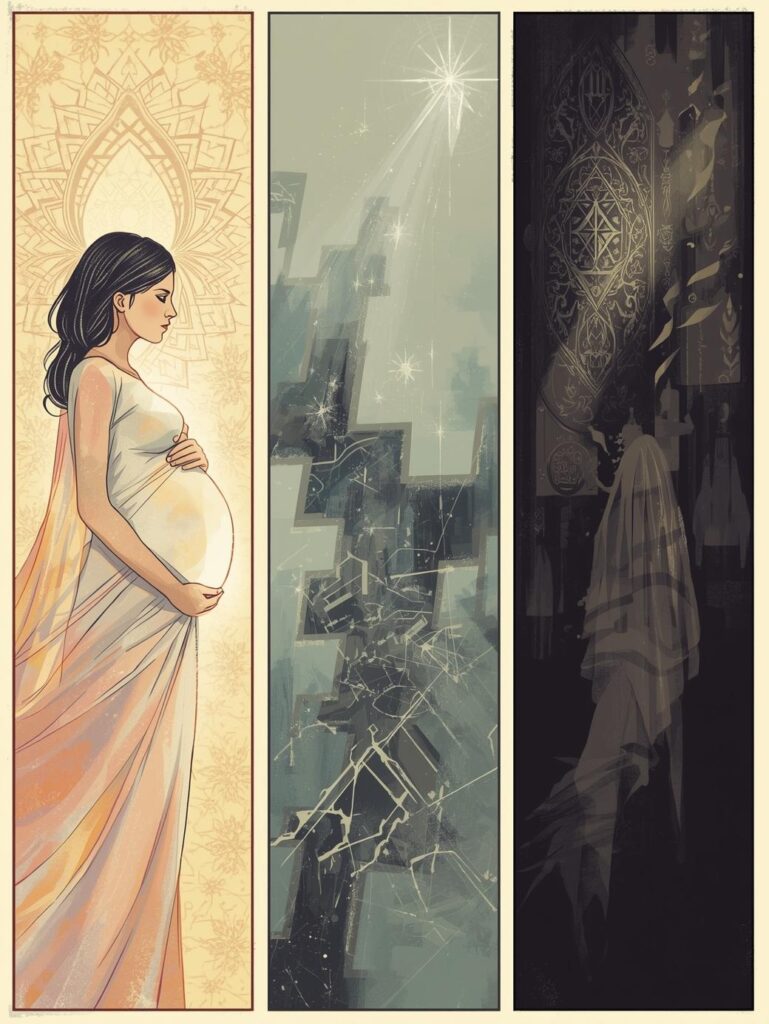
- Frightening or anxious dreams with no symbolic guidance.
- Pregnancy may feel heavy, stressful, or alarming.
- Response: Seek refuge in Allah, avoid sharing, and move on.
Quick Tip to Identify:
| Feeling | Likely Type |
|---|---|
| Calm & meaningful | True Dream |
| Stressful but familiar | Psychological |
| Fearful & confusing | From Shayṭān |
Takeaway: Pregnancy dreams often highlight patience, inner responsibility, and preparation, whether spiritual or psychological.
6 Hidden Meanings of Drowning in Water Dream Meaning in Islam (Spiritual & Psychological)
Conclusion
Pregnancy dreams in Islam are deeply symbolic and often reflect aspects of your inner life rather than literal events. They can indicate responsibilities, hidden matters, or periods of personal and spiritual growth.
Key Takeaways:
- Emotional Tone Matters: Joyful dreams often symbolize blessings and growth, while heavy or anxious dreams may reflect stress or hidden burdens.
- Interpretation Varies by Gender: For women, dreams can signify personal transformation or family matters; for men, they usually relate to responsibilities or concealed plans.
- Three Sources of Dreams:
- True Dreams (Ru’yā): From Allah, meaningful, and spiritually significant.
- Psychological Dreams: Reflect daily thoughts, stress, or upcoming changes.
- Disturbing Dreams: From Shayṭān, meant to cause anxiety; seek refuge in Allah.
- Preparation and Patience: Pregnancy dreams emphasize waiting, reflection, and readiness for life’s transitions.
- Practical Guidance: Use these dreams as a mirror for self-reflection, spiritual awareness, and personal growth.
In essence, pregnancy dreams invite mindfulness, patience, and trust in Allah’s guidance, helping believers navigate life’s changes with clarity and faith.
Every Pregnancy Dreams Dream Scenario Interpreted
✦ Positive
◆ Contextual
● Neutral
⚠ Warning
What Three Classical Scholars Say About Pregnancy Dreams Dreams
Critical Mistakes When Interpreting Pregnancy Dreams Dreams
- ✗Taking a pregnancy dream as a confirmed literal predictionDream interpretation provides spiritual insight, not medical certainty. A pregnancy dream should prompt gratitude and du’ā, not replace a pregnancy test or doctor’s visit.
- ✗Applying a man’s interpretation to a woman’s dreamGender context is fundamental in Islamic dream interpretation. The same pregnancy dream has entirely different meanings for men and women according to classical scholars.
- ✗Ignoring the emotional quality of the dreamA joyful pregnancy dream and a distressing one carry opposite meanings. Classical scholars always asked: ‘How did you feel during the dream?’ before offering any interpretation.
- ✗Sharing the dream before it unfoldsIbn Sirin warned that sharing a positive dream prematurely — especially with people who may feel envy — can diminish its barakah. Keep glad-tiding dreams private until the blessing manifests.
- ✗Assuming it only applies to literal pregnancyPregnancy in Islamic dream tradition is a rich symbol of growth, creation, and new responsibility. Reducing it only to literal pregnancy misses the majority of classical interpretations.
🌙 Record & Track Your Dreams
Use the Islamic Dream Journal to document your dreams, note context, and revisit them when their meanings become clear.
📚 Related Islamic Dream Guides
📚 Authoritative Islamic Sources Referenced
- Ibn Sirin, Muhammad. Tafsir al-Ahlam al-Kabir. Beirut: Dar al-Kutub al-Ilmiyyah.
- Al-Nabulsi, Abd al-Ghani. Ta’tir al-Anam fi Tafsir al-Ahlam. Cairo: Dar al-Hadith.
- Al-Bukhari, Muhammad. Sahih al-Bukhari, Kitab al-Ta’bir. View Hadith 6985 on Sunnah.com ↗
- Muslim ibn al-Hajjaj. Sahih Muslim, Kitab al-Ru’yā. View Hadith 5901 on Sunnah.com ↗
- Ibn Qutaybah, Abd Allah. Ta’bir al-Ru’yā. Beirut: Dar al-Kutub al-‘Ilmiyyah.
- Al-Qurtubi, Muhammad. Al-Tadhkirah fi Ahwal al-Mawta.
- Qur’an — multiple Surahs referenced in article. Read on Quran.com ↗