 The Dream Explainer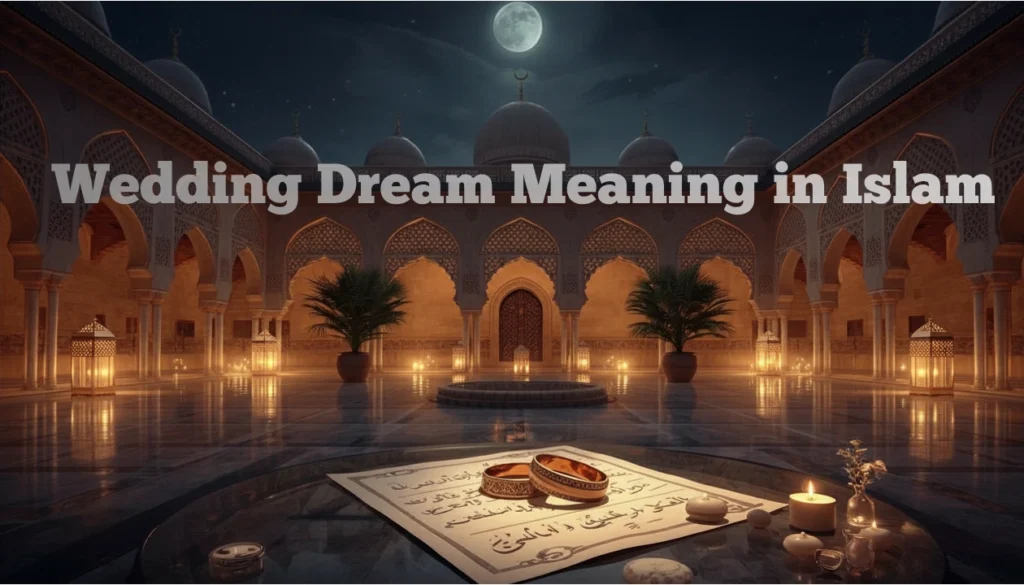
You wake up with a vivid image: a wedding, perhaps your own, perhaps someone else’s. The emotions linger—joy, confusion, even discomfort. Naturally, you wonder what it means.
This guide explains the wedding dream meaning in Islam through a balanced Islamic lens: classical scholarship, emotional context, and spiritual caution.
In Islam, dreams are not all equal. Some carry meaning, others reflect your inner state, and some should be ignored altogether.
Scholars approached dreams with care, linking symbols to context rather than fixed meanings. A wedding in a dream can point to الخير (good), responsibility, or even a test.
Only Allah knows the true meaning of what we see in sleep.
The wedding dream meaning in Islam usually points to life change, responsibility, or transition—not necessarily a real marriage. A joyful wedding may suggest ease and الخير (good), while a stressful or forced wedding can reflect pressure, burden, or a test.
What Does Wedding Dream Meaning in Islam Point To Overall?
In classical Islamic interpretation, marriage is not merely romance. It often represents responsibility, authority, and transition.
Dream interpretations attributed to Ibn Sirin in classical dream-literature collections commonly treat marriage as a symbol connected to duty, status, and entering a new matter. Because of that, a wedding dream should not be read as a simple prediction of marriage.
Allah says:
وَمِنْ آيَاتِهِ أَنْ خَلَقَ لَكُمْ مِنْ أَنْفُسِكُمْ أَزْوَاجًا لِتَسْكُنُوا إِلَيْهَا
“And among His signs is that He created for you spouses…” — Qur’an 30:21
A wedding in a dream may reflect:
Because wedding dreams often symbolize major transitions, they can sit close to other symbolic life-change dreams, such as dreams about death. If that theme appears alongside a wedding, see our guide to death dream meaning in Islam for a careful symbolic reading.
- A new phase in life
- An increase in responsibility
- A shift in social or personal status
- A test that requires patience and clarity
Classical Lens
Marriage symbols in Islamic dream literature are often read through responsibility, status, duty, and transition—not only romance.
Reader Lens
Your feeling in the dream matters: peace, fear, pressure, or confusion can change how the symbol is understood.
Key insight: A wedding dream is rarely about literal marriage alone. It often points to change—what kind depends on your context.
Takeaway: Look beyond the wedding scene itself. Ask what responsibility, transition, or emotional pressure is appearing in your waking life.
Types of Dreams in Islam: Why Interpretation Changes
Before interpreting any dream, you need to understand its source. Islam does not treat every dream as a divine message.
The Prophet ﷺ said:
الرُّؤْيَا الصَّالِحَةُ مِنَ اللَّهِ، وَالْحُلْمُ مِنَ الشَّيْطَانِ
“A good dream is from Allah, and a bad dream is from Shaytan.” — Sahih al-Bukhari, Book 91, Hadith 6986
Scholars often explain dreams in three broad categories:
1. Dreams from Allah
These are meaningful, calm, and may carry glad tidings or guidance.
2. Dreams from النفس
These reflect your inner thoughts, emotions, worries, or desires.
3. Dreams from Shaytan
These disturb, frighten, or confuse you and should not be given unnecessary attention.
This framework matters because a joyful wedding dream may feel meaningful, but if you have been thinking constantly about marriage, family pressure, or relationships, it may simply reflect your النفس.
Takeaway: Do not rush to interpret. First ask: did this dream feel peaceful, stressful, random, or disturbing?
Seeing Your Own Wedding in a Dream
Seeing your own wedding in a dream is one of the most common variations—and one of the most misunderstood.
Within Islamic dream interpretation, marriage can symbolize entering a new responsibility or phase of life. This is why your own wedding dream may point to work, family duties, emotional commitments, or a major personal decision.
If the spouse is known, the dream may relate to a connection, benefit, concern, or responsibility tied to that person.
If the spouse is unknown, the dream may indicate uncertainty, a new stage, or a matter whose outcome is not clear to you yet.
Your emotions matter deeply:
- Happiness may suggest ease, blessing, or readiness.
- Anxiety may suggest pressure or fear of change.
- Sadness may suggest emotional burden or reluctance.
For a deeper explanation of this specific scenario, read our own wedding dream meaning in Islam guide.
Al-Nabulsi’s dream-interpretation tradition also links marriage symbols with rank, responsibility, and worldly affairs. Because these texts require careful verification and context, the safest reading is reflective rather than absolute.
Takeaway: Your own wedding in a dream often mirrors what you are stepping into—willingly, anxiously, or under pressure.
Seeing Someone Else’s Wedding in a Dream
After seeing your own wedding, seeing someone else’s wedding shifts the focus outward. The dream may relate to events, news, or changes around you rather than something directly about your own marriage.
If the person is known, consider your relationship with them.
Are you close? Distant? Worried about them? Happy for them?
Those feelings can shape the dream’s meaning. A calm wedding involving someone you love may reflect good news or social harmony. A tense wedding may reflect concern, comparison, jealousy, or a change you are still processing.
If the person is unknown, the dream may symbolize a general change in your environment. It may also reflect your own feelings about community, family expectations, or life stages.
The Prophet ﷺ said:
رُؤْيَا الْمُؤْمِنِ جُزْءٌ مِنْ سِتَّةٍ وَأَرْبَعِينَ جُزْءًا مِنَ النُّبُوَّةِ
“The dream of a believer is one part of forty-six parts of prophecy.” — Sahih al-Bukhari, Book 91, Hadith 6989
Takeaway: Someone else’s wedding often reflects what is unfolding around you—not necessarily your own future.
Different Wedding Dream Scenarios and Their Meanings
Not all wedding dreams are the same. Context transforms meaning.
| Dream scenario | Possible Islamic interpretation |
|---|---|
| Happy wedding | Positive change, رزق, ease, or social harmony |
| Sad or silent wedding | Burden, difficulty, emotional strain, or hidden concern |
| Wedding with music | Possible warning, distraction, or heedlessness |
| Forced marriage | Pressure, lack of control, or unwanted responsibility |
| Second marriage | Increased responsibility, status, or added worldly concern |
If your dream focused specifically on marrying again, read the full cluster guide on second marriage dream meaning in Islam.
A short example
If you dream of a joyful, modest wedding and wake with peace, the dream may point to a positive transition.
If you dream of being forced into a wedding and wake distressed, it may reflect pressure in your waking life rather than a literal marriage event.
Dream interpretation reports attributed to classical scholars sometimes treat loud celebration, excessive noise, or chaotic gatherings as less favorable than calm and dignified scenes. Because such details depend on source and context, avoid making a final judgment from one symbol alone.
If your dream includes multiple symbols or feels unusually detailed, it may require deeper reflection. If it’s still sitting with you, our Islamic Dream Interpreter can help you reflect on it with scholarly grounding.
Takeaway: The details—emotion, setting, people, and atmosphere—give the dream its shape.
Is Seeing a Wedding in a Dream a Good or Bad Sign?
There is no single answer. In Islam, symbols are not automatically good or bad; context defines meaning.
A wedding dream may be positive when the setting feels calm, modest, and peaceful. It may suggest readiness, social harmony, or a new responsibility that arrives with ease.
It may be more concerning when the dream feels heavy, forced, chaotic, or spiritually uncomfortable. In that case, the wedding scene may point to pressure, distraction, or a responsibility you do not feel ready to carry.
Do vs. Don’t
| Do | Don’t |
|---|---|
| Notice how you felt in the dream | Assume every wedding dream means marriage |
| Reflect on your current life stage | Treat one symbol as a fixed prediction |
| Make dua for clarity | Panic over a disturbing image |
A calm dream and a disturbing dream should not be handled the same way. The Sunnah teaches believers to receive good dreams with gratitude and seek refuge from troubling ones.
Takeaway: Focus on the dream’s feeling and context—not only the wedding image.
Common Misconceptions About Wedding Dreams in Islam
Many people misunderstand wedding dreams because they treat symbols as fixed formulas.
Common mistakes
- “It means I will get married soon.”
Not necessarily. Most wedding dreams point to responsibility, transition, or inner concern rather than a direct prediction. - “All wedding dreams are good signs.”
Some may suggest ease, while others may indicate burden, pressure, or trial. - “Dreams are always messages from Allah.”
Many dreams come from النفس or daily thoughts. - “One symbol always has one meaning.”
Islamic dream interpretation is contextual, not mechanical.
This is why scholars warned against overconfidence. A dream can be meaningful without being certain, and it can be emotional without being prophetic.
Takeaway: Reflection is safer than assumption. Let the dream guide you toward awareness, not fear.
How to Reflect on Your Wedding Dream Islamically
Instead of rushing to interpret, pause and reflect.
Ask yourself:
- Who was in the dream?
- How did you feel?
- Was the setting calm or chaotic?
- Was the wedding modest or excessive?
- Did the dream linger or fade quickly?
Then respond in a balanced way:
- Make dua for clarity.
- Ignore disturbing dreams and seek refuge in Allah.
- Share meaningful dreams only with trusted people.
- Avoid building major life decisions on dreams alone.
The Prophet ﷺ said:
إِذَا رَأَى أَحَدُكُمُ الرُّؤْيَا يُحِبُّهَا فَإِنَّمَا هِيَ مِنَ اللَّهِ… وَإِذَا رَأَى غَيْرَ ذَلِكَ مِمَّا يَكْرَهُ فَإِنَّمَا هِيَ مِنَ الشَّيْطَانِ
“If one of you sees a dream he likes, it is from Allah… and if he sees something else that he dislikes, it is from Shaytan.” — Sahih al-Bukhari, Book 91, Hadith 6985
Takeaway: Reflection grounded in deen is more valuable than chasing exact meanings.
Related Resource
Want to explore another dream with the same calm Islamic approach? Visit The Dream Explainer and use the Islamic Dream Interpreter for a more personalized reflection.
Frequently Asked Questions
What does it mean to see your own wedding in a dream in Islam?
It often symbolizes a new responsibility or life transition rather than literal marriage. If the dream feels positive, it may indicate readiness or الخير. If it feels heavy, it may reflect pressure, reluctance, or an internal struggle around change.
Is seeing a wedding in a dream a good sign in Islam?
It can be either good or challenging depending on context. Joyful, calm weddings may indicate positive change, while stressful, chaotic, or forced ones may suggest difficulty, pressure, or a responsibility that feels heavy.
Does a wedding dream mean I will get married soon?
Not usually. Most Islamic interpretations connect wedding dreams with responsibility, status, emotional change, or worldly affairs. Marriage may be relevant only if the dream’s details, your life context, and your emotional state support that reading.
What does a forced marriage dream mean in Islam?
A forced marriage dream often reflects pressure, lack of control, or emotional stress in waking life. It may point to decisions you feel pushed into rather than choices you are making with peace and clarity.
What if I see a wedding with music in my dream?
A wedding with excessive music, noise, or chaos may be read as a warning sign in some Islamic interpretations. It can suggest distraction, heedlessness, or emotional unrest. The meaning still depends on the full dream and your state after waking.
Conclusion
The wedding dream meaning in Islam is less about romance and more about what you are stepping into: responsibility, change, or even a test.
The same symbol can carry opposite meanings depending on your emotions, setting, and life context.
If your dream stays with you, take a moment to reflect on it through an Islamic lens. For deeper clarity, use the guidance above to explore the details with calm, grounded insight.