 The Dream Explainer
Technology dreams in Islam can feel personal because they often involve phones, messages, privacy, reputation, and online stress. This guide explains how Muslims may reflect on dreams about technology with Islamic caution, emotional awareness, and practical next steps.
Quick Answer Box
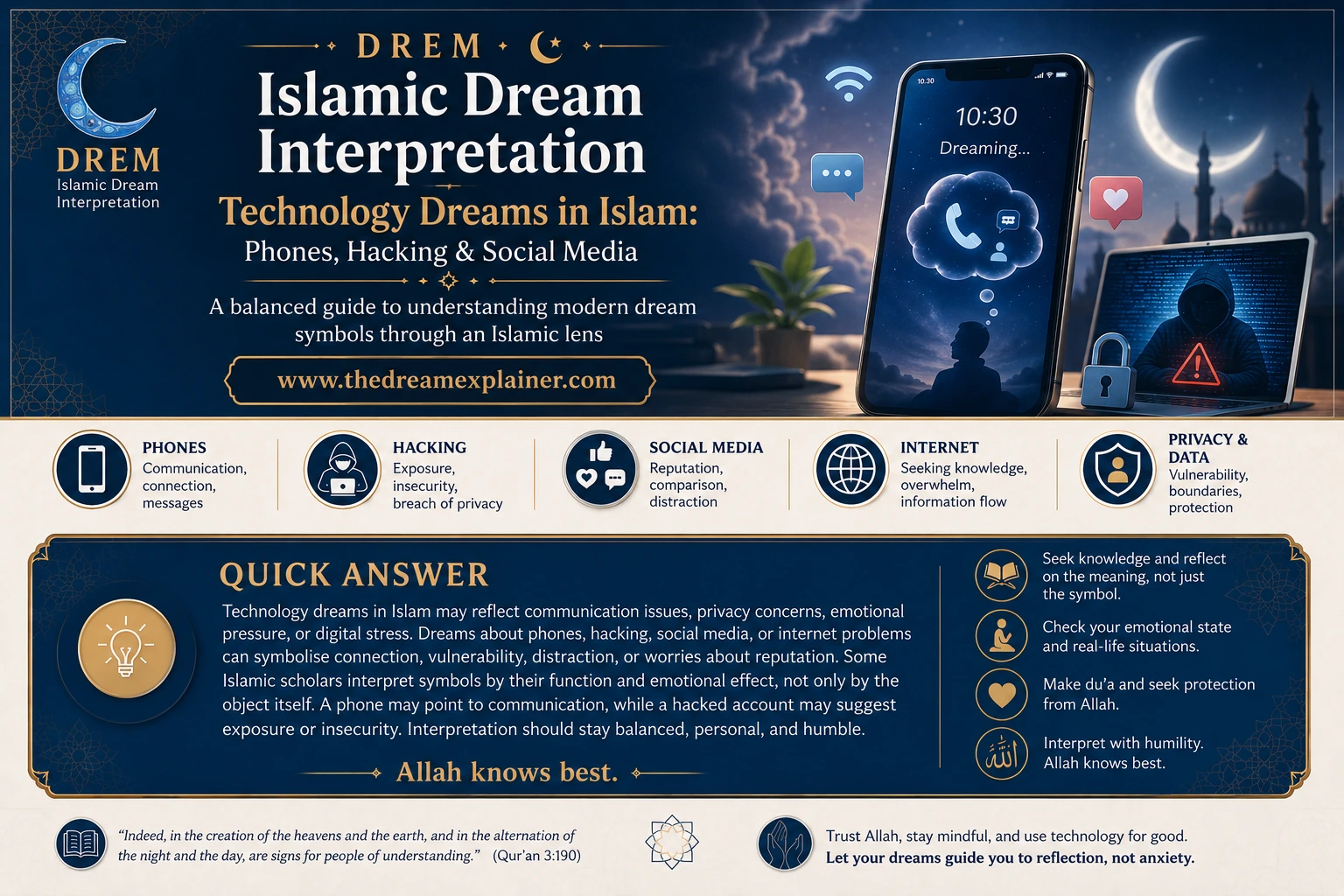
Technology dreams in Islam may reflect communication issues, privacy concerns, emotional pressure, or digital stress. Dreams about phones, hacking, social media, or internet problems can symbolise connection, vulnerability, distraction, or worries about reputation. Some Islamic scholars interpret symbols by their function and emotional effect, not only by the object itself. A phone may point to communication, while a hacked account may suggest exposure or insecurity. Interpretation should stay balanced, personal, and humble. Allah knows best.
Islamic Foundation of Technology Dreams in Islam
How Islamic Dream Interpretation Applies to Modern Symbols
Classical Islamic scholars did not discuss smartphones, online accounts, or social media directly. Still, many underlying themes already existed in traditional dream interpretation.
Communication, secrecy, public reputation, trust, and emotional attachment are not new human concerns. Modern technology may simply give these old concerns a new image inside a dream.
A phone may symbolise access, communication, or emotional closeness. A hacked account may suggest vulnerability or fear of exposure. Social media attention may reflect public image, comparison, or pressure.
Islamic dream interpretation usually considers meaning, emotion, and context. It does not rely on the literal object alone.
Readers unfamiliar with broader dream principles may benefit from this complete guide to Islamic dream interpretation before analysing specific symbols.
Classical Principles Behind Communication & Privacy Symbols
Traditional Islamic dream interpretation often discussed letters, messengers, locked things, hidden speech, and public settings. These symbols were sometimes connected to communication, secrets, reputation, and trust.
Modern digital symbols may be approached through similar themes. A locked phone may resemble a guarded matter. Deleted messages may suggest regret or unfinished communication. Public online embarrassment may reflect concern about honour or social standing.
These links should be used carefully. They are reflective parallels, not certain rulings about what a dream must mean.
Relevant Hadith Themes About Dreams, Anxiety, and Reflection
Islam teaches that dreams can have different sources and different levels of meaning. Some may bring comfort. Some may reflect personal worries. Others may feel disturbing and should not be allowed to control the heart.
When a dream feels upsetting, the believer is encouraged to seek refuge in Allah and avoid spreading frightening details. This calm approach is helpful for digital anxiety dreams, especially when the dream involves hacking, exposure, or online conflict.
One authentic narration about disturbing dreams appears in Sahih Muslim, where believers are advised to seek refuge in Allah after distressing dreams and not allow fear to control them emotionally.
A dream may invite reflection. It should not push a person into panic, suspicion, or obsession.
Why Context Matters More Than Literal Technology Objects
Two people may dream about the same phone but have different interpretations. One person may be worried about a relationship. Another may be exhausted from work messages.
The dream’s feeling matters. So does the dreamer’s waking life, spiritual state, stress level, and recent experiences.
A peaceful phone dream may suggest connection or clarity. A stressful one may point to pressure, confusion, or emotional overload.
Because context matters so much, technology dreams should be read with patience and humility.
Common Technology Dream Scenarios in Islam
Dreaming About a Broken Phone
A broken phone in a dream may suggest communication difficulty, emotional distance, or frustration about not being understood. It can also reflect a relationship where messages feel unclear or connection feels interrupted.
A broken phone may also overlap with themes explored in communication dreams in Islam, especially when the dream reflects misunderstandings or emotional distance.
If the dream felt stressful, it may point to overwhelm rather than a spiritual problem. If it felt calm, it may suggest a need for quiet or distance from constant contact.
Dreaming About Being Hacked
A hacked account dream may feel intense because it involves privacy, control, and exposure. In Islamic reflection, it can point toward emotional vulnerability, weak boundaries, or worry about trust and personal security.
This does not mean harm is coming. It may reflect anxiety, online stress, or emotional insecurity. The dream may gently invite better boundaries and more trust in Allah.
Readers who frequently experience exposure or hacking dreams may also relate to broader themes discussed in privacy and security dreams in Islam.
Dreaming About Losing Internet Connection
Losing internet connection may symbolise isolation, emotional distance, or a break from constant noise. It can also suggest a desire for rest, even if the dream feels inconvenient.
If the dream felt peaceful, disconnection may represent needed calm. If it felt frightening, it may reflect fear of being left out or unsupported.
Dreaming About Viral Social Media Attention
Going viral in a dream may relate to reputation, recognition, pressure, or fear of being watched. It can also reflect concern about what others think.
From an Islamic lens, this dream may encourage reflection on sincerity and public approval. It should not be treated as proof of future fame or humiliation.
Dreams about online attention often connect closely with themes covered in social reputation dreams in Islam, particularly around validation and public image.
Dreaming About Deleted Messages
Deleted messages may suggest regret, missed communication, or unresolved emotions. They may also reflect silence between people, especially after conflict or distance.
If the dream brings sadness, the dreamer may need to consider whether a conversation remains unfinished. If the dream feels relieving, it may suggest letting go.
Dreaming About Privacy Exposure
Dreams about leaked information, exposed photos, or public embarrassment may reflect fear of judgment. They can also suggest emotional sensitivity during a stressful period.
This type of dream should be handled gently. It does not automatically point to scandal or harm. It may simply show that the dreamer feels unprotected or emotionally exposed.
Dreaming About Receiving Important Notifications
Important notifications may symbolise anticipation, urgency, or something in life asking for attention. The meaning depends on the feeling inside the dream.
A comforting notification may suggest hope or clarity. A frightening one may reflect pressure, worry, or emotional overload.
Dreaming About Online Arguments
Online argument dreams may reflect unresolved tension, defensive feelings, or fear of criticism. They may also arise after stressful exchanges or social pressure.
Islam encourages careful speech and emotional restraint. This kind of dream may gently invite calm communication and less reactive behaviour.
Dreaming About Forgotten Passwords
Forgotten passwords may symbolise confusion, blocked access, insecurity, or mental fatigue. The dreamer may feel unable to reach something important.
This may relate to work stress, emotional distance, or spiritual disconnection. It can also come from ordinary tiredness and pressure.
Dreaming About Endless Screen Scrolling
Endless scrolling may suggest distraction, burnout, restlessness, or emotional avoidance. It often appears when the mind feels crowded by too much content.
Spiritually, it may encourage reflection on balance and remembrance. Emotionally, it may suggest that the dreamer needs stillness and rest.
Meaning Summary Table
| Scenario | Possible Meaning | Sign Type |
|---|---|---|
| Broken phone | Communication difficulty, emotional distance, or interrupted connection | Reflective |
| Hacked account | Vulnerability, privacy fear, or broken trust | Cautionary |
| Lost internet connection | Isolation, digital overload, or need for quiet | Reflective |
| Viral social media attention | Reputation pressure, validation, or fear of public judgment | Mixed |
| Deleted messages | Regret, unresolved emotions, or unfinished communication | Emotional |
| Privacy exposure | Fear of judgment, shame, or emotional insecurity | Cautionary |
| Important notifications | Anticipation, urgency, or a matter needing attention | Mixed |
| Online arguments | Tension, defensiveness, or communication stress | Reflective |
| Forgotten passwords | Confusion, blocked access, or mental exhaustion | Emotional |
| Endless screen scrolling | Distraction, burnout, or digital overstimulation | Reflective |
Positive Signs vs Cautionary Symbols
When Technology Dreams May Reflect Opportunity
Technology dreams are not always negative. A phone, message, or online connection may suggest communication, reconciliation, clarity, or helpful news.
A calm dream about receiving a message may reflect emotional openness. A peaceful online interaction may suggest improved understanding or renewed connection.
If the dream leaves the person feeling grateful or settled, it may be worth reflecting on the positive relationship or opportunity it brings to mind.
When They May Reflect Anxiety or Overload
Some technology dreams may reflect stress, overstimulation, or emotional pressure. This is especially true when the dream includes panic, hacking, exposure, or endless notifications.
These images can point to digital burnout, comparison, fear of judgment, or weak boundaries. They may also reflect ordinary anxiety from work, family, or relationships.
The goal is not to become afraid. The goal is to notice where the heart may need calm, rest, or better balance.
Avoiding Fear-Based Interpretations
A disturbing technology dream should not be treated as a certain warning. Many dreams come from stress, habits, and emotional processing.
It is better to avoid dramatic interpretations. A calm Islamic response is usually more helpful than searching for frightening meanings online.
Reflect gently, seek refuge in Allah if the dream felt bad, and do not let the dream create suspicion. Allah knows best.
Emotional & Life Context
Digital Burnout and Mental Overstimulation
Many people spend hours online for work, family, learning, and entertainment. The mind may continue processing that digital noise during sleep.
These dreams should always be interpreted with emotional context. A dream about notifications may simply reflect a tired mind.
Persistent notification dreams or online panic may overlap with patterns discussed in digital anxiety dreams in Islam.
Online Reputation Anxiety
Social media can create pressure around appearance, comparison, and public opinion. Dreams about exposure or online attention may reflect that pressure.
The dreamer may be worried about being misunderstood. They may also fear criticism, embarrassment, or losing control of their image.
Relationship Stress Through Communication Apps
Modern relationships often depend on messages, calls, and online availability. Delayed replies or unclear texts can create real emotional tension.
Dreams about unread messages, blocked accounts, or broken phones may reflect those waking concerns. They may point toward a need for clearer, kinder communication.
Work Pressure and Constant Connectivity
Emails, group chats, and notifications can make rest feel difficult. Some people feel reachable all the time.
Dreams about digital tasks may reflect exhaustion. They may also suggest that the dreamer needs healthier limits around work and rest.
Spiritual Distraction in a Hyperconnected World
A dream about endless scrolling or constant digital noise may encourage reflection on spiritual attention. It may suggest that the heart feels scattered.
This does not mean the dream is a punishment. It may simply invite balance, dhikr, better sleep habits, and more intentional time with Allah.
This framework follows broader principles explained in how to interpret dreams in Islam, especially the importance of context and emotional tone.
Islamic Interpretation Framework for Technology Dreams
1. Quick Islamic Meaning
Technology dreams in Islam often revolve around communication, emotional exposure, distraction, or social pressure. A dream about phones, messages, hacking, or social media may reflect how connected, overwhelmed, or emotionally vulnerable a person currently feels.
The emotional tone of the dream usually matters more than the device itself. A calm dream may feel reassuring, while a stressful one may reflect pressure or emotional overload. These dreams should be approached with humility rather than certainty. Allah knows best.
2. Classical Symbolic Basis
Classical scholars such as Ibn Sirin and Al-Nabulsi did not write about smartphones or social media directly. However, they discussed symbols connected to messengers, sealed containers, letters, public gatherings, guarded possessions, and hidden matters.
In modern dreams, phones and online accounts may sometimes function similarly because they involve communication, trust, privacy, and reputation. A locked device may resemble older symbols connected to restricted access or concealed information. These comparisons should remain thoughtful and symbolic rather than treated as exact one-to-one interpretations from classical texts.
3. Modern Interpretation
For many Muslims today, technology is closely tied to work, family, relationships, and emotional availability. Dreams about unread messages, deleted conversations, endless scrolling, or online conflict may reflect exhaustion, social pressure, comparison, or unresolved communication.
In some situations, these dreams may simply mirror the emotional intensity of modern digital life rather than carry deeper symbolic meaning. A person under constant pressure from notifications, expectations, or online visibility may naturally process those experiences during sleep.
4. Spiritual Meaning
Some technology dreams may gently reflect the state of a person’s attention and inner calm. Constant digital noise in a dream can sometimes mirror a heart that feels mentally crowded or spiritually restless.
Dreams focused heavily on approval, comparison, or online attention may encourage reflection on sincerity and emotional dependence on people’s reactions. These reflections should inspire balance, mindfulness, and self-awareness rather than guilt or fear. The goal is not to become anxious about the dream, but to return calmly to steadiness and remembrance of Allah.
5. Psychological Meaning
The mind often continues processing emotional stress during sleep. Technology dreams may appear during periods of burnout, loneliness, overstimulation, conflict, or emotional uncertainty.
Someone who constantly checks notifications during the day may naturally dream about messages, exposure, broken devices, or losing access to communication. Repeated distressing dreams may also suggest that the dreamer needs better rest, emotional support, or healthier digital boundaries. These experiences should be approached with care rather than self-diagnosis.
Persistent stress and overstimulation can also affect dream activity and sleep quality. General information about emotional wellbeing and mental health can be found through the National Institute of Mental Health.
6. Positive vs Negative Contexts
A peaceful dream involving clear communication, helpful messages, or restored contact may feel emotionally reassuring and reflect openness, clarity, or reconnection. In some cases, it may simply mirror a desire for stronger relationships or calmer communication.
By contrast, dreams involving panic, exposure, hacking, online arguments, or endless notifications may point toward stress, insecurity, emotional overload, or fear of judgment. The surrounding emotions often matter more than the technology itself. The dreamer should reflect calmly on their real-life circumstances. Only Allah knows the full meaning.
7. Related Quran & Hadith Themes
Islamic teachings encourage believers to protect trust, avoid harmful suspicion, and speak carefully. These themes can feel especially relevant in dreams involving exposure, online conflict, gossip, or public reputation.
The Prophet Muhammad ﷺ taught that a disturbing dream should not cause lasting fear, and he advised believers to seek refuge in Allah after such dreams (Sahih Muslim). Similarly, Surah Al-Hujurat warns believers against suspicion and harmful assumptions (49:12).
Readers can explore the verse through Quran.com.
These teachings do not define one exact meaning for a dream. Instead, they offer spiritual guidance that may help the dreamer respond with calm reflection, sincerity, and emotional balance.
8. What To Do After This Dream
After seeing a technology-related dream, it may help to pause before reacting emotionally. If the dream felt comforting, the dreamer may thank Allah and reflect on any positive reminders it contained.
If the dream felt disturbing, they may seek refuge in Allah, avoid repeatedly discussing the dream, and focus on emotional steadiness instead of fear. Practical steps may include reducing screen exposure before sleep, increasing dhikr, reviewing stressful communication patterns, and improving rest habits.
A difficult dream does not define a person’s future, and calm trust in Allah remains more important than over-interpreting symbols.
What To Do After Seeing Technology Dreams
Responding to Disturbing Dreams Islamically
If a technology dream feels upsetting, respond with calm faith. Seek refuge in Allah, make dua, and avoid repeating frightening details without need.
The aim is not to decode every image. The aim is to protect the heart from fear and return to steadiness.
Reflecting Without Obsessing
Reflection can be helpful when it stays balanced. Ask what emotion was strongest in the dream. Then compare it with current life pressure.
A dream about hacking may relate to boundaries. A dream about deleted messages may relate to unresolved communication. After reflection, leave the matter with Allah.
Some readers find that dream journaling in Islam helps them notice emotional patterns without becoming overly attached to interpretation.
Practical Digital-Life Changes to Consider
Some dreams may encourage healthier digital habits. The dreamer may reduce screen time before sleep, pause stressful online arguments, or protect private information more carefully.
They may also choose clearer communication with loved ones. Small changes can bring emotional relief without turning the dream into a source of fear.
Dua, Dhikr, and Emotional Grounding
Dhikr and dua can help settle the heart after a confusing dream. Reading Quran before sleep may also bring calm and focus.
If digital stress is high, the dreamer may benefit from quiet moments without screens. Rest, gratitude, and remembrance can support both spiritual and emotional balance.