 The Dream Explainer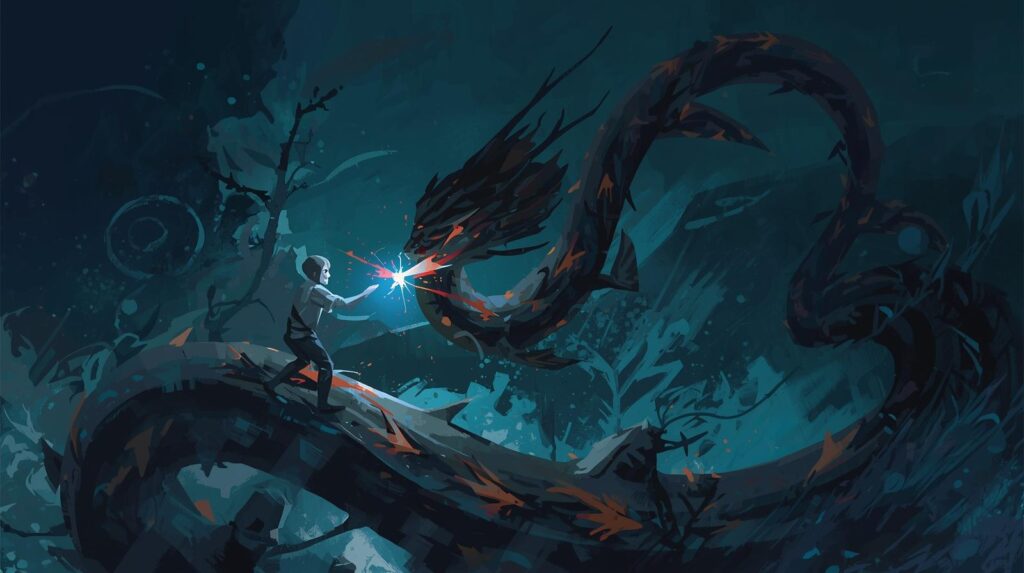
Killing a snake in a dream can feel intense, especially if the dream involved a fight, a bite, or a large or black snake. In Islamic dream interpretation, the details and the outcome matter more than one fixed meaning.
Killing a Snake Dream Meaning in Islam may reflect overcoming fear, conflict, pressure, temptation, or a harmful influence. Killing the snake can symbolically suggest relief, stronger boundaries, or regaining control, but it should not be treated as a prediction or proof about another person. Allah knows best.
Common Killing-a-Snake Dream Scenarios
1) Killing the snake easily
Quick answer: Easy victory often means the problem is more manageable than it feels.
An effortless kill may suggest that the problem is more manageable than it feels. The dream can reflect growing confidence or readiness to deal with an issue before it becomes larger.
2) Killing the snake after a long struggle
Quick answer: A struggle usually mirrors a long conflict or persistent temptation.
A long struggle may reflect repeated stress, an on-and-off conflict, or a habit you keep battling. Killing the snake after the struggle may suggest persistence, resilience, or progress after difficulty.
3) Killing a snake in your house
Quick answer: This often symbolizes restoring peace and removing harm from the household.
A snake inside the home may reflect concern involving family, privacy, conflict, or household stress. Killing it may suggest restoring boundaries, resolving tension, or regaining a sense of safety at home.
4) Killing the snake but still feeling afraid
Quick answer: Lingering fear signals you still carry emotional impact even if the problem is ending.
This is worth taking seriously. The dream can push you toward wise action: seek Allah’s protection through consistent remembrance, set clearer boundaries, and avoid impulsive confrontation that escalates rather than resolves.
5) Killing a black snake
Quick answer: Classical scholars noted darker-colored snakes often represent more intense or deeply concealed threats.
A black snake may suggest a fear or problem that feels intense, hidden, or difficult to understand. Killing it may reflect overcoming that pressure. Treat color as a contextual clue, not a fixed code.
6) Killing a snake that bit you
Quick answer: This often symbolizes recovery after harm or betrayal.
Being bitten and then killing the snake may reflect experiencing difficulty and then regaining control — for example, healing, correcting a mistake, or protecting yourself after feeling emotionally hurt. If the bite was the central focus, read: Being Bitten by a Snake in a Dream (Islamic Meaning).
7) Someone else kills the snake for you
Quick answer: This often means support is arriving.
Someone else killing the snake may reflect support, advice, guidance, or intervention from a trustworthy person. It can also be a reminder that you do not need to handle every difficulty alone.
8) You try to kill it but it escapes
Quick answer: An escape often signals an unresolved issue.
This may reflect partial progress — you have confronted a problem but have not yet reached its root. It can suggest that the same issue may return if only the surface problem is addressed.
9) Killing the snake and cutting it into pieces
Quick answer: This often symbolizes a decisive ending and firm boundaries.
The thoroughness of the act in the dream mirrors thoroughness needed in real life — removing the roots of a harmful pattern entirely, not just reducing it temporarily. This scenario is often a prompt for more decisive action.
10) Killing the snake but it returns to life
Quick answer: This often reflects a recurring problem that keeps coming back.
If the snake revives, the dream highlights something unresolved at a deeper level. Combine consistent spiritual routine — prayer, dhikr, seeking forgiveness — with practical problem-solving to address the cycle at its source.
11) Killing a small snake
Quick answer: A small snake often signals a minor threat or early-stage problem.
A small snake may reflect a minor or early-stage concern. Killing it may suggest dealing with a manageable issue before it becomes more disruptive.
12) Killing a big or large snake
Quick answer: A large snake may reflect a problem that feels powerful, intimidating, or difficult to ignore.
Killing a big snake may suggest growing confidence, confronting a major fear, or gaining control over a situation that once felt overwhelming. The size reflects how large the problem feels to you, not a guaranteed level of danger.
13) Killing a snake with your own hands
Quick answer: Using your hands may emphasize direct action and personal responsibility.
This scenario may reflect confronting a problem yourself, setting a firm boundary, or taking control without relying on someone else to resolve the issue for you.
14) Killing a snake that was attacking someone else
Quick answer: This may reflect protectiveness, concern, or a desire to help someone facing pressure.
The dream should not be treated as proof that the other person is in danger. It may simply reflect your concern for them or your wish to support them in a difficult situation.
What Killing a Snake May Represent
Killing a Snake Dream Meaning in Islam often points toward overcoming something that feels threatening, harmful, or difficult. Depending on the dreamer’s circumstances, the snake may represent fear, conflict, pressure, temptation, or a harmful pattern rather than a specific person.
- Relief after hardship: a burden may be lifting or a stressful phase may be ending.
- Victory in conflict: you may be becoming more willing to confront a real problem or defend healthy boundaries.
- Breaking a harmful pattern: the dream may reflect repentance, discipline, or leaving an unhealthy influence.
- Protecting the home: if the snake appears inside the house, the dream may relate to family tension, privacy, or household stress.
Keep the interpretation broad and safe. The dream may reflect your inner state and readiness to act rather than identifying a literal enemy.
Islamic Foundation: How to Approach This Dream
Before assigning meaning to the dream, remember that Islam distinguishes between different kinds of dreams. A dream may bring encouragement, reflect waking thoughts, or simply be disturbing. This framework helps prevent superstition and panic.
Reference: Sahih Muslim 2261.
- If the dream was frightening and chaotic: treat it as a nightmare and follow the Sunnah steps in What to Do After a Bad Dream in Islam.
- If it was coherent and left you relieved: it may encourage useful reflection, especially if you are dealing with conflict, fear, or temptation in waking life.
- If you watched scary content or slept stressed: the dream may be self-talk — your mind rehearsing “victory” over fear.
Traditional Islamic Interpretations of Killing a Snake
Classical Islamic dream literature often treats snakes as symbols of hostility, danger, temptation, or difficult opposition. Exact attributions vary across manuscripts and later compilations, so these meanings should be presented as traditional interpretive frameworks rather than certain statements from a specific scholar.
Material attributed to Ibn Sirin
Traditional material attributed to Ibn Sirin commonly links snakes with enemies or harmful forces. Within that framework, killing the snake may be read as overcoming opposition, fear, or a damaging influence. Because the well-known dream manual circulated under his name is a later compilation, specific claims should be treated cautiously.
Ibn Shaheen
Ibn Shaheen’s dream tradition also discusses snakes in relation to conflict, hidden hostility, and difficulty. The manner of the struggle can be useful symbolically: an easy victory may reflect a manageable problem, while a long fight may mirror a persistent or deeply rooted issue.
Al-Nabulsi
Al-Nabulsi’s dream tradition includes snakes among symbols of hostility, power, and inner struggle. Killing the snake may be read as overcoming an external difficulty or gaining control over a harmful impulse or temptation.
Important: These are traditional symbolic readings, not Qur’anic promises, legal rulings, or guaranteed predictions. A dream should never be used as evidence against another person. Allah knows best.
Interpretation Summary Table
| What happened in the dream | Possible reflection | Practical takeaway |
|---|---|---|
| You killed the snake quickly | Quick relief; problem may be manageable | Act early and calmly |
| You struggled before killing it | Long conflict or persistent pressure | Stay consistent and patient |
| You killed it inside your home | Restoring peace or stronger household boundaries | Address family tension calmly |
| You killed it after it bit you | Recovery after difficulty; regaining control | Heal, learn, and set boundaries |
| You tried but it escaped | Unresolved issue or partial progress | Look for the root cause |
| Someone else killed it | Support or intervention from others | Accept trustworthy help |
| Black snake killed | Overcoming an intense or hidden fear | Address the real source of pressure |
| Snake cut into pieces | Decisive ending or firm boundaries | Remove the underlying problem |
| Snake returns to life | Recurring problem or unfinished cycle | Combine practical and spiritual action |
| Small snake killed | Minor or early-stage concern | Deal with it before it grows |
| Big snake killed | Overcoming a powerful or intimidating fear | Recognize your growing confidence |
| Killed with your own hands | Direct action and personal control | Take responsibility where appropriate |
| Killed snake but still afraid | Lingering emotional impact | Give yourself time to settle |
Psychological Meaning
Quick answer: Psychologically, killing a snake may reflect empowerment, boundary-setting, or the mind rehearsing a sense of control over fear.
This type of dream can appear during periods of stress, conflict, anxiety, major decisions, or exposure to frightening content. It may also be influenced by irregular sleep or recent experiences. Consider psychological and physical explanations alongside any spiritual reflection.
What to Do After This Dream
Quick answer: If the dream felt peaceful and relieving, thank Allah and take any useful reminder from it without assuming a prediction. If it felt frightening, apply the Sunnah response and move on.
- If it felt positive: thank Allah, strengthen good choices, and keep worship consistent.
- If it felt frightening: seek refuge in Allah, lightly blow or dry-spit to the left three times, change position, and avoid spreading the disturbing dream. Full guide: What to Do After a Bad Dream in Islam.
- In all cases: avoid superstition and accusations. Use waking-life evidence, consultation, and sound judgment before making important decisions.
Nightly protection may include Ayat al-Kursi and the three Quls before sleep. See Ayat al-Kursi (2:255).
Frequently Asked Questions
Is killing a snake in a dream always good?
Not always. It may reflect relief, confidence, or overcoming pressure, but a frightening or chaotic dream may simply be disturbing. The emotional tone and full context matter.
Does killing a snake mean I defeated a real enemy?
No. The snake may represent fear, conflict, temptation, anxiety, or another difficulty rather than a specific person. Do not accuse anyone because of a dream.
What does killing a black snake mean in Islam?
Killing a black snake may reflect overcoming a fear or problem that feels intense, hidden, or difficult to understand. Color should be treated as a contextual clue rather than a fixed code.
What does killing a big snake mean in Islam?
Killing a large snake may reflect confronting a major fear, pressure, or problem that once felt overwhelming. The size reflects how powerful the issue feels to you, not a guaranteed level of danger.
What does killing a snake with your own hands mean?
This may emphasize direct action, personal responsibility, or taking control of a problem yourself. It does not guarantee that a real conflict will occur.
What if I killed the snake after it bit me?
This may reflect recovery after difficulty, healing, or regaining control after feeling hurt or pressured. If the bite was the main focus, read Being Bitten by a Snake in a Dream.
What if I tried to kill the snake but it escaped?
This may reflect an unresolved issue or partial progress. Consider whether a waking-life problem has been addressed only on the surface.
What should I read after a snake dream?
Start with Snake Dream Meaning in Islam and the broader Islamic Dream Interpretation Guide.
References
- Dream categories in Islam: Sahih Muslim 2261
- Nightly protection hadith: Sahih Bukhari (recitation of three Quls before sleep)
- Ibn Sirin, Muhammad. Muntakhab al-Kalam fi Tafsir al-Ahlam. Classical Islamic dream interpretation text. d. 110 AH.
- Ibn Shaheen, Khalil. Al-Isharat fi ‘Ilm al-‘Ibarat. d. 830 AH.
- Al-Nabulsi, Abd al-Ghani. Ta’tir al-Anam fi Tafsir al-Manam. d. 1143 AH.
- Snake hub: Snake Dream Meaning in Islam
- Authoritative external resource: Sunnah.com (Hadith library)
Conclusion
Killing a Snake Dream Meaning in Islam may reflect overcoming fear, conflict, temptation, pressure, or another difficult influence. An easy kill, a long struggle, a black or large snake, killing it after a bite, or failing to kill it can all shift the reflection.
Treat traditional symbolism as a guide rather than certainty. Do not accuse anyone or make major decisions from a dream alone. If the dream was disturbing, follow the Sunnah response; if it felt encouraging, take any useful reminder calmly and continue with sound judgment. Allah knows best.