 The Dream Explainer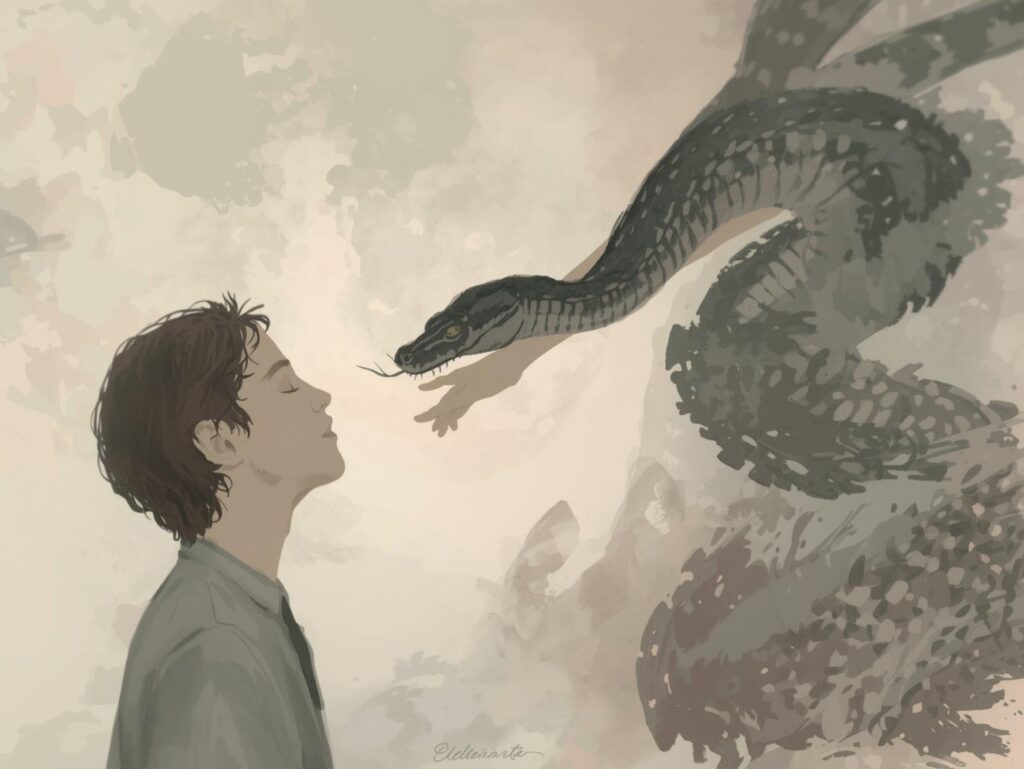
Snake dream meaning in Islam often points to hidden harm, fear, hostility, jealousy, temptation, or pressure in waking life. But a snake dream does not automatically prove jinn, sihr, black magic, or that a specific person is your enemy.
If the dream frightened you, follow the Sunnah response: seek refuge in Allah, blow lightly to the left, avoid spreading the dream, and do not let it create suspicion or panic.
Snake Dream Meaning in Islam: Main Meaning
Snake dream meaning in Islam is usually connected to hidden harm, enmity, temptation, fear, jealousy, or a harmful influence that needs attention. In classical Islamic dream interpretation, the snake is among the most symbolically loaded animals a dreamer can encounter — but its meaning is never fixed. The full picture depends entirely on the details.
A snake that watches you quietly does not mean the same thing as a snake that bites you. A snake in your house does not carry the same weight as a snake outside in an open field. Killing a snake is also very different from running away from one. This pillar guide covers the broad symbol first, then moves into each major scenario so you can understand both the general framework and your specific dream.
Snakes are not the only animals that carry layered meaning in Islamic dream interpretation. If you are also seeing other creatures, our guide on seeing animals in dreams in Islam gives a broader framework for animal symbolism across classical scholarship. For the specific cluster topics, if your dream involved being bitten, see being bitten by a snake in a dream in Islam. If you killed the snake, read killing a snake dream meaning in Islam.
The Islamic Framework Before You Interpret
Islamic dream interpretation starts not with symbols but with classification. The Prophet ﷺ described three types of dreams: a true dream from Allah, a disturbing dream from Shaytan, and a dream arising from a person’s own thoughts and daily preoccupations. This classification matters because the correct response differs for each type — and not every frightening dream deserves deep symbolic analysis. Read the three-types narration here: Jami’ al-Tirmidhi 2280. For the Sunnah response to a disliked dream, see Sahih Muslim 2261a.
Ru’yā — True Dream
From Allah. Coherent, meaningful, and often leaves a person in calm reflection after waking. Worth interpreting carefully with context.
Ḥadīth al-nafs — Self-Talk
Daily stress, fears, and thoughts replaying during sleep. Carries no divine message. Address the waking-life pressure instead.
Ḥulm — Nightmare
From Shaytan. Chaotic, frightening, and designed to disturb the believer — not to instruct. Apply the Sunnah response, not deep analysis.
The full Islamic dream interpretation guide explains this classification system in detail. If the snake dream felt frightening or chaotic, follow the Sunnah response rather than dwelling on what the snake symbolized. The practical steps are covered fully in the guide on what to do after a bad dream in Islam.
What Scholars Say Snakes Symbolize
In classical Islamic dream interpretation, snakes are often discussed as symbols of enmity, hidden harm, temptation, or danger. Dream literature attributed to Ibn Sirin, Al-Nabulsi, and Al-Karmani includes snake-related interpretations, while broader Islamic writings about dreams remind us to interpret with caution and context rather than fixed rules.
Across classical works, the snake’s hostility can take several forms:
Hidden Hostility
Harm that wears a friendly face and is not yet visible in waking life. The danger exists but has not shown itself openly.
Temptation and Sin
A pull toward something that weakens iman or moral clarity. The snake may represent the lure itself rather than a person.
Fear and Vulnerability
An internal feeling of exposure, especially when the dream repeats. Often mirrors unresolved anxiety rather than an external threat.
Tension in the Home
Especially when the snake appears inside private or domestic spaces. Points to marriage, family, or household conflict.
Emotional Pressure
A conflict, worry, or difficult relationship that feels hard to face. The snake’s menace mirrors the emotional weight the dreamer carries.
The Qur’an itself uses serpent imagery with a meaning entirely different from threat or danger. In the story of Musa عليه السلام, his staff became a serpent as a divine sign and proof of prophethood — showing that the meaning of a snake image shifts entirely with context. See Qur’an 20:20 and Qur’an 7:107.
Context Questions That Change the Meaning
The fastest way to understand the Islamic meaning of a snake dream is to examine the dream’s context before reaching for any symbolic meaning. Location, behavior, outcome, and the dreamer’s emotional state after waking all shift the interpretation significantly.
- Where was the snake? House, bed, workplace, water, road, garden?
- What did it do? Chase, bite, watch quietly, speak, attack, or die?
- What did you do? Run, freeze, recite Qur’an, kill it, or escape?
- How did you feel after waking? Calm, frightened, confused, or relieved?
- What is happening in your life right now? Conflict, jealousy, financial stress, family tension, or spiritual struggle?
Do not interpret the snake in isolation. Interpret the whole dream. A single creature does not carry a complete message without the surrounding story.
It is also worth asking whether you have been dreaming of other unsettling imagery. If death or dying has appeared alongside the snake, reading about death dream meaning in Islam will help you understand how Islamic scholars treated that combination of themes.
Common Snake Dream Scenarios in Islam
Most snake dreams follow recognizable patterns. The scenarios below represent the most common configurations. Treat each as a starting direction, then confirm it against your emotions and real-life circumstances.
1. Snake Chasing You in a Dream
A snake chasing you in a dream may reflect a conflict, pressure, temptation, fear, or responsibility you are trying to avoid. The pursuit is often more important than the snake itself because it points to something persistent or difficult to escape.
Escaping may suggest relief or stronger boundaries, while being caught may reflect feeling overwhelmed. The dream does not prove that a specific person is your enemy or that harm is certain.
For a complete explanation, read Snake Chasing You in a Dream Islam.
2. Snake Watching You Without Attacking
A snake watching you quietly may suggest hidden tension or an awareness of something that feels dangerous but has not moved yet. It does not prove that someone is planning harm.
3. Snake Biting You
A snake bite often suggests harm — emotional injury, betrayal, harsh speech, or fear that someone has already hurt you or may soon. For a full breakdown by body location and circumstance, read being bitten by a snake in a dream in Islam.
4. Killing a Snake
Killing a snake typically shifts the meaning from threat toward resolution. It often signals victory over a harmful influence, resisting a temptation, ending a toxic pattern, or choosing to face something difficult. For details, read killing a snake dream meaning in Islam.
5. Snake in Your House
A snake inside the home commonly points to private tension — family stress, hidden distrust, resentment between people who share a space, or anxiety about the home environment itself.
6. Snake in Your Bed
A snake in the bed often connects to private fears around trust, intimacy, and vulnerability within a close relationship. Context and waking emotion matter here more than anywhere.
7. Many Snakes
A dream filled with many snakes often reflects overwhelm: multiple pressures, recurring jealousy themes, social conflict, or a feeling of being surrounded by problems.
8. Small Snake
A small snake may represent a minor problem that will grow if left unaddressed. It can be a habit, a quiet conflict, a temptation, or a small concern.
9. Large Snake
A large snake often mirrors a major fear or intense emotional pressure in waking life. Sometimes the snake’s size reflects the strength of your fear more than the actual danger.
10. Snake Shedding Its Skin
Snake shedding its skin may point to change or transition — leaving a previous stage behind. If the dream felt calm, this may lean neutral or positive.
11. Snake Speaking to You
A speaking snake may represent deceptive thoughts, tempting internal voices, manipulative advice, or confusion about a decision. Pay attention to whether the words pushed fear, suspicion, arrogance, sin, or despair.
12. Escaping the Snake
Escaping the snake unharmed often suggests safety or successfully avoiding harm. If you woke with relief rather than fear, this direction is more likely.
13. Spider and Snake Together
When unsettling creatures appear together, the combination may intensify the theme of hidden threat or entrapment. If spiders also appeared, our guide on seeing spiders in dreams in Islam explores that symbol.
Snake Bite Dream Meaning in Islam
A snake bite dream is one of the most important cluster topics under the broader pillar of snake dream meaning in Islam. In many classical interpretations, a bite suggests that hidden harm has already reached the dreamer in some form — whether through words, betrayal, financial loss, or emotional injury.
The meaning changes based on where the snake bit you:
Right Hand
Livelihood, reputation, capability, or good deeds. Harm may be touching what you build or earn.
Left Hand
Support networks, close relationships, or trust. The harm may be coming from someone near to you.
Foot
Direction in life, travel, plans, or forward progress. Something is disrupting your path.
Back
Hidden betrayal or harm occurring behind your awareness. You may not yet know it has happened.
Chest
Emotional heaviness, faith, spiritual state, or inner peace. The harm touches your heart directly.
If your dream centered on the bite, use the dedicated guide: being bitten by a snake in a dream in Islam.
Killing a Snake in a Dream Meaning in Islam
Killing a snake in a dream shifts the emotional and symbolic meaning. Instead of only fear or warning, the dream may point to overcoming a harmful influence, resisting temptation, ending a toxic relationship pattern, or finding protection after pressure.
Victory Over Harm
A harmful influence or situation is being overcome.
Relief After Fear
A period of pressure, anxiety, or conflict may be reaching its end.
Ending a Toxic Dynamic
A damaging pattern, relationship, or situation is being brought to a close.
Resisting Temptation
A temptation that had persisted has been refused.
If you killed the snake after it had already bitten you, the dream may mean that some harm was felt or experienced, but it did not defeat you. For details, read killing a snake dream meaning in Islam.
Snake Colors in Dreams
Color does not decode a dream by itself. It is a secondary clue. The action, location, and outcome of the dream carry more interpretive weight.
| Snake Color | Possible Symbolic Direction | What to Check |
|---|---|---|
| Black snake | Intense fear, strong hostility, serious temptation | Is the danger real, or is stress amplifying the threat? |
| White snake | Subtle issue, hidden caution, a soft-looking danger | Does something seem harmless but still feel wrong? |
| Green snake | Growth mixed with danger, envy, religious-looking deception | Is something good being affected by jealousy or pride? |
| Yellow snake | Weakness, illness anxiety, jealousy, emotional fatigue | Are you worried about health, envy, or low energy? |
| Red snake | Anger, passion, aggression, emotionally driven danger | Is a conflict being driven by resentment or strong feeling? |
Snake in House, Bed, or Water
Location often does more interpretive work than any other single detail in a snake dream.
Snake in the House
Points to family tension, private conflict, hidden resentment, or anxiety about domestic life. It does not prove a family member is an enemy.
Snake in the Bed
Draws the meaning toward marriage, trust, intimacy, vulnerability, or private fear within a close relationship. Do not let the dream create suspicion without real evidence.
Snake in Water
Suggests fear mixed with emotional pressure — anxiety beneath the surface, or a threat that feels difficult to pin down. If the dream also involved drowning or submersion, see drowning in water dream meaning in Islam.
Do Snake Dreams Mean Jinn or Sihr?
A snake dream does not automatically mean jinn, sihr, possession, or black magic. Islam teaches belief in the unseen world, but it also teaches justice, evidence, and the serious prohibition against baseless suspicion. Accusing a person of sihr or asserting that one is under spiritual attack based on a dream is not consistent with Islamic principles.
Warning vs. Stress: How to Tell
One of the most practical questions after any difficult dream is whether it was a meaningful warning, a stress dream, or a nightmare. Islamic guidance gives us a balanced way to approach each possibility.
Ru’yā — Warning or Reminder
Coherent, meaningful, leaves reflective calm after waking.
Best response: Make dua, examine your actions, proceed with caution.
Ḥadīth al-nafs — Self-Talk
Connected to daily stress, fears, or active worries.
Best response: Address the real-life pressure causing the dream.
Ḥulm — Nightmare
Chaotic, terrifying, and leaves helplessness.
Best response: Seek refuge in Allah and do not dwell on it.
What to Do After Seeing a Snake in a Dream
If the snake dream frightened you, apply the Sunnah response before anything else. Shaytan’s goal with a ḥulm is fear, confusion, and overthinking. The Sunnah steps cut that off directly.
Seek refuge in Allah from Shaytan — say A’udhu billahi min al-Shaytan al-rajim.
Blow or spit lightly to your left three times.
Change your sleeping position.
Do not spread the disturbing dream widely to others.
Pray two rak’ah if the feeling of unease persists after waking.
Make dua for protection, clarity, and wellbeing.
The full hadith evidence and step-by-step guide for each of these actions is covered in what to do after a bad dream in Islam.
Many Muslims also recite Ayat al-Kursi before sleep as protection: Qur’an 2:255. The Prophet ﷺ also taught reciting Surah al-Ikhlas, al-Falaq, and al-Nas before sleep: Sahih al-Bukhari 5017.
Common Mistakes When Interpreting Snake Dreams
Accusing a Specific Person
A dream is not evidence against anyone. Suspicion without proof is prohibited in Islam.
Treating Dreams as Fate
Your choices, tawakkul, dua, and practical actions still matter.
Assuming Sihr Immediately
One snake dream — or even several — does not establish black magic or possession.
Overweighting Color
Color is only a secondary clue. The action and outcome of the dream carry more meaning.
Ignoring Practical Causes
Stress, anxiety, poor sleep, illness, and emotional conflict can all produce vivid snake dreams.
Obsessing Over a Nightmare
If the dream felt like a ḥulm, interpreting it in detail gives Shaytan exactly what he intended.
Important Note About Snake Dreams in Islam
Only Allah knows the unseen. A snake dream should not be used as proof that a specific person is your enemy, that sihr is happening, or that jinn are involved. Dreams can remind a believer to be cautious, but they are not evidence against another person.
If the dream frightened you, follow the Sunnah response for disturbing dreams. If the dream made you reflect calmly, use it as a reminder for dua, self-checking, and wise caution without suspicion or paranoia.
FAQ: Snake Dream Meaning in Islam
Does snake dream meaning in Islam always indicate an enemy?
No. Snake dream meaning in Islam often points toward harm, hostility, temptation, or fear, but it can also reflect stress, anxiety, and unresolved emotions with no enemy involved.
Does a snake dream mean someone is doing black magic on me?
No. A snake dream alone proves nothing about sihr. Islam discourages baseless suspicion, and no classical scholar treated a single dream as proof of black magic from a specific person.
What does it mean if a snake bites me in a dream in Islam?
A bite often signals harm or a fear of harm — betrayal, emotional injury, or harsh speech. The location of the bite and the surrounding details shift the meaning significantly. See the full guide: being bitten by a snake in a dream in Islam.
What does it mean if I kill a snake in the dream?
Killing a snake typically signals overcoming a harmful influence, resisting temptation, or ending a damaging pattern. Full scenario guide: killing a snake dream meaning in Islam.
What does a black snake dream mean in Islam?
A black snake may point to intense fear, strong hostility, or a serious temptation. But the meaning depends on what the snake did and how the dream ended.
What does a snake chasing you in a dream mean in Islam?
It may reflect a conflict, pressure, temptation, fear, or responsibility you are trying to avoid. The pursuit often points to something persistent in waking life. Read the full guide to Snake Chasing You in a Dream Islam.
What does a snake in the house mean in Islam?
It may point to private tension, family conflict, hidden stress, or anxiety about domestic life. It should not be used to accuse any family member without clear waking evidence.
Why do I keep dreaming of snakes?
Recurring snake dreams often reflect recurring stress, unresolved conflict, persistent fear, or a spiritual struggle that has not been addressed.
What should I do right after a frightening snake dream?
Seek refuge in Allah, blow lightly to your left three times, change your sleeping position, and avoid spreading the dream. The complete Sunnah protocol is covered in what to do after a bad dream in Islam.
Can other animals appear alongside snakes in dreams?
Yes. When they do, the combination of symbols shifts the overall reading. For broader animal symbolism, read seeing animals in dreams in Islam.
References
- Three types of dreams: Jami’ al-Tirmidhi 2280.
- Sunnah response to disliked dreams: Sahih Muslim 2261a.
- Qur’anic imagery — Musa’s staff as a serpent: Qur’an 20:20 and Qur’an 7:107.
- Ayat al-Kursi: Qur’an 2:255.
- Reciting al-Ikhlas, al-Falaq, and al-Nas before sleep: Sahih al-Bukhari 5017.
- Further reading: Islamic dream interpretation guide.
Related Islamic Dream Guides
- Snake Chasing You in a Dream Islam
- Being Bitten by a Snake in a Dream in Islam
- Killing a Snake Dream Meaning in Islam
- What to Do After a Bad Dream in Islam
- Death Dream Meaning in Islam
- Seeing Spiders in Dreams in Islam
- Seeing Animals in a Dream in Islam
- Islamic Dream Interpretation Guide
Takeaway: Snake dream meaning in Islam works best as a disciplined process, not superstition. Classify the dream type first, read the full context second, avoid directing suspicion at others, and follow the Sunnah steps if the dream caused fear.