
Islamic Dream Interpretation: Complete Guide to Understanding Your Dreams According to Quran and Sunnah
2Five Classical Methods of Islamic Dream Interpretation
3Common Dream Symbols and Their Islamic Meanings
4In-Depth Interpretations: Connecting to Specialized Dream Meanings
5Practical Etiquette for Your Dreams
6Common Misconceptions About Islamic Dream Interpretation
7Frequently Asked Questions About Islamic Dream Interpretation
8When Dreams Don’t Need Interpretation
9Finding Qualified Interpreters
10Balancing Spiritual and Psychological Understanding
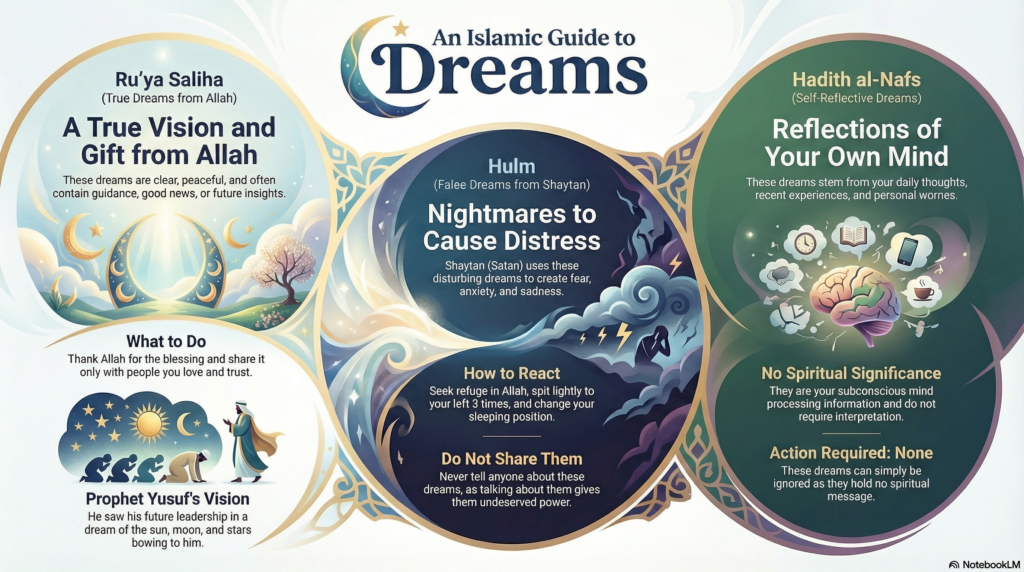
In Islam, dreams are divided into three types: Ru’yā Ṣāliḥah (true dreams from Allah), Ḥulm (nightmares from Shaytan), and Ḥadīth al-Nafs (self-generated dreams from the mind). Only the first type requires interpretation. The Prophet ﷺ said true dreams are one of the forty-six parts of prophethood remaining after revelation ended.
You wake up at 3 AM, heart racing from a vivid dream. Was it a message from Allah? A warning? Or just your mind processing yesterday’s stress?
Dreams have puzzled humans since the beginning of time, but Islam offers clear guidance on understanding them. The Prophet Muhammad (peace be upon him) taught us that dreams carry real spiritual weight—they’re actually one of the forty-six parts of prophethood that remain after the prophets have passed.
This comprehensive guide breaks down authentic Islamic dream interpretation using the Quran, Hadith, and classical scholarship. You’ll learn how to identify meaningful dreams, interpret common symbols, respond correctly to what you see while sleeping, and understand the deeper spiritual significance behind specific dream scenarios.
The Three Types of Dreams Every Muslim Should Know
Islamic scholars classify dreams into three distinct categories. Understanding these differences helps you know which dreams matter and which ones you should simply ignore.
True Dreams Come From Allah
Ru’ya Saliha, or righteous dreams, are gifts from Allah. These dreams feel clear, peaceful, and often leave you with a sense of certainty. The Prophet (PBUH) said these dreams rarely fail to come true for believers with truthful speech.
When you experience a true dream, share it with people you trust and love. Thank Allah for the blessing. These dreams often contain guidance, good news, or glimpses of future events that Allah wants you to know about.
Prophet Yusuf (Joseph) saw his future kingship through a dream of eleven stars, the sun, and moon bowing to him. His father Prophet Ya’qub immediately recognized this as a true vision from Allah.
False Dreams Come From Shaytan
Hulm refers to disturbing nightmares designed to frighten you. Shaytan uses these dreams to create anxiety, fear, and distress in your heart.
The Prophet (PBUH) gave specific instructions for handling these dreams. Spit lightly three times to your left, seek refuge in Allah from Shaytan, and change your sleeping position. Most importantly, never share these dreams with anyone—talking about them gives them power they don’t deserve.
These dreams cannot harm you if you follow the prophetic guidance. They’re essentially spiritual spam that you should delete and forget.
Self-Reflective Dreams Come From Your Mind
Hadith al-Nafs represents dreams that stem from your own thoughts, worries, and daily experiences. Your brain processes information while you sleep, creating dreams about work stress, family concerns, or things you’ve been thinking about.
These dreams don’t require interpretation or spiritual action. They’re simply your subconscious mind organizing memories and emotions. Islam acknowledges the psychological dimension of dreams and doesn’t attach spiritual significance to every nighttime vision.
Five Classical Methods of Islamic Dream Interpretation
Islamic scholars developed systematic approaches to understanding dreams based on authentic sources. These methods help you interpret symbols within their proper religious and cultural context.

Interpretation Through the Quran
The Qur’an confirms that true dreams (ru’yā ṣāliḥah) are real and meaningful. Islam does not treat righteous dreams as imagination or superstition. Instead, Allah sometimes uses dreams to provide guidance, warnings, or glad tidings to His servants.
The Prophet Muhammad (peace be upon him) taught that true dreams are one of the remaining parts of prophethood, continuing after revelation has ended. While dreams no longer bring religious law, they may still carry truth and insight for believers.
Dreams of the Prophets: Revelation and Testing
One of the clearest Qur’anic examples is the dream of Prophet Ibrahim (peace be upon him). He saw in a dream that he was commanded to sacrifice his son:
“O my son, indeed I have seen in a dream that I must sacrifice you…”
(Qur’an 37:102)
Allah later confirms that this vision was true and fulfilled. This shows that for prophets, dreams could serve as revelation—and it establishes the seriousness of true dreams in Islam.
Prophet Yusuf (AS): Dreams Foretelling the Future
The Qur’an dedicates an entire chapter to dreams through the story of Prophet Yusuf (peace be upon him). As a child, he saw the sun, moon, and eleven stars bowing to him:
“Indeed, I saw eleven stars and the sun and the moon; I saw them prostrating to me.”
(Qur’an 12:4)
Years later, this dream unfolded exactly as seen. The lesson is clear: true dreams may take time to manifest, but they come true according to Allah’s wisdom, not human timing.
True Dreams Are Not Limited to Prophets
The Qur’an also shows that non-prophets can receive true dreams. The King of Egypt saw a dream of seven fat cows and seven lean cows:
“Indeed, I have seen seven fat cows eaten by seven lean ones…”
(Qur’an 12:43)
Through Prophet Yusuf’s interpretation, this dream saved an entire nation from famine. Even Yusuf’s fellow prisoners saw true dreams that were fulfilled exactly (Qur’an 12:36–41).
This proves that Allah may grant true dreams to whomever He wills, though correct interpretation requires knowledge and wisdom.
The Prophet Muhammad’s ﷺ True Vision
Allah explicitly confirms the truthfulness of the Prophet Muhammad’s dreams:
“Certainly Allah has fulfilled the vision for His Messenger in truth…”
(Qur’an 48:27)
This verse establishes a core rule: true dreams never contradict reality, the Qur’an, or the Sunnah.
How to Recognize a True Dream
Scholars describe true dreams as:
- Clear and memorable
- Free from chaos or confusion
- Aligned with Islamic teachings
- Relevant to the dreamer’s life
The Prophet ﷺ also linked dream truthfulness to personal honesty, saying that those most truthful in speech have the truest dreams.
The Proper Response to a True Dream
When you experience a good or meaningful dream:
- Thank Allah
- Share it only with those who wish you well
- Reflect calmly—do not obsess
- Never allow it to override Qur’an, Sunnah, or sound judgment
True dreams are guidance, not guarantees.
Key Takeaway
The Qur’an presents dreams as a mercy, not a mystery. They are neither meaningless nor absolute authority. True dreams encourage reflection, patience, and gratitude—while protecting believers from superstition and fear.
Interpretation Through the Sunnah
The Prophet Muhammad (PBUH) interpreted dreams for his companions and shared meanings that remain authoritative for Muslims today.
He taught that fetters (chains on your feet) represent firmness in religion, not imprisonment or restriction. An iron collar, however, indicates constraint or trial. Green gardens symbolize Paradise, while milk represents knowledge and fitrah (natural disposition).
These prophetic interpretations override cultural assumptions. When the Prophet spoke about dream meanings, he established permanent principles that Muslims still apply fourteen centuries later.
Interpretation Through Proverbs and Cultural Context
Arabic proverbs and common sayings influence how classical scholars interpret certain dreams. Someone familiar with Arabic culture might understand nuances that translate poorly across languages.
This method requires wisdom because culture changes over time and varies by region. What works as a proverb in 9th-century Baghdad might not apply to modern life, but the underlying principles often remain relevant.
Interpretation Through Names and Metaphors
Names carry meaning in dreams. Seeing someone named Sa’id (which means “happy” in Arabic) might indicate happiness coming your way. Animals serve as metaphors—a lion represents strength, authority, or a powerful person, while a snake typically symbolizes an enemy or hidden danger.
Colors also function metaphorically. Green connects to Islam, growth, and Paradise. White suggests purity and light. Black can indicate difficulties or the unknown.
Interpretation Through Opposites
Sometimes dreams mean the reverse of what appears. Classical scholars noted that crying in a dream may actually predict joy, while laughter could indicate coming sorrow.
This method requires careful application. You can’t just reverse every dream symbol randomly. Qualified interpreters understand when opposites apply based on other dream elements and the dreamer’s circumstances.
Common Dream Symbols and Their Islamic Meanings
Certain symbols appear frequently in Muslim dreams. Here’s what authentic sources say about them.
Dreams About Religious Practices

Prayer – Seeing yourself pray indicates spiritual elevation and the possibility of answered duas. The quality of your prayer in the dream matters—smooth, focused prayer differs from distracted or difficult prayer.
Wudu (Ablution) – Making wudu in a dream suggests purification from sins and a fresh spiritual start. Water’s cleanliness in the dream affects the interpretation.
Hajj – Dreaming of pilgrimage can mean you’ll fulfill this religious duty, embark on a spiritual journey, or receive blessings associated with Hajj.
Fasting – Dreams of fasting relate to patience, spiritual discipline, and future rewards. They might also indicate a need to practice more self-control in waking life.
Natural Elements in Dreams

Water remains the most versatile symbol. Clear, clean water flowing gently brings knowledge and life. Murky, stagnant, or overwhelming water suggests trials or confusion. The Quran frequently connects water with life, mercy, and revelation.
Fire has dual meanings. Controlled fire might represent passion, energy, or divine light. Destructive fire warns of punishment, tribulation, or destructive anger.
Earth symbolizes stability and sustenance when fertile, but burial or endings when barren. Wind can bring change and mercy as a gentle breeze, or confusion and trial as a violent storm.
People and Relationships
Dreams about deceased relatives often carry special significance. Many scholars consider these potentially true dreams where the departed convey messages or seek prayers.
Living family members usually reflect your relationship dynamics or concerns about them. Unknown people in dreams might represent aspects of yourself you haven’t acknowledged or people you’ll meet in the future.
Seeing prophets or righteous scholars indicates spiritual guidance and blessings. These dreams deserve serious attention and gratitude.
Animal Symbolism

Snakes – Nearly always represent enemies, hidden dangers, or deceitful people in your life. The snake’s size and behavior indicate the threat level. Dreams of being bitten by a snake deserve special attention and proper interpretation.
Spiders – Can represent weak enemies, traps, or cunning individuals. The spider’s web symbolizes entanglement or deception. Understanding spider dreams helps you identify subtle threats in your waking life.
Lions – Power, authority, and courage. Could represent a king, leader, or your own strength. A threatening lion might indicate oppression from someone powerful.
Camels – Patience, long journeys, and sustenance. Camels endure harsh conditions, so they often symbolize perseverance through difficulties.
Birds – Angels, good news, and souls. Different birds carry different meanings based on their characteristics and Quranic mentions.
Fish – Provision, knowledge, and sometimes women. Fish swimming freely in clear water is generally positive.
In-Depth Interpretations: Connecting to Specialized Dream Meanings
While this guide provides foundational principles, certain dream categories require detailed exploration. We’ve created comprehensive resources for the most commonly asked dream interpretations.
Dreams About Wealth and Prosperity

Finding money, winning prizes, or receiving wealth in dreams carries specific meanings in Islamic interpretation. These dreams often relate to knowledge, spiritual rewards, or upcoming provision—but not always literal financial gain.
Read our complete guide: Islamic Interpretation of Winning Money in Dreams →
This dedicated article explores:
- When money dreams indicate actual financial change versus spiritual wealth
- The difference between finding, earning, and stealing money in dreams
- How the source and amount of money affect interpretation
- Classical scholars’ views on wealth-related dreams
- Prophetic guidance on dreams of gold, silver, and currency
Dreams About Pregnancy and Childbirth

Pregnancy dreams rank among the most powerful and meaningful visions Muslims experience. Whether you’re actually pregnant, hoping to conceive, or not expecting at all, these dreams carry layered spiritual significance.
Discover the meanings: Islamic Dream Interpretation of Pregnancy →
Understand the symbolism: What Giving Birth in Dreams Means in Islam →
These comprehensive guides cover:
- Pregnancy dreams for men and their unique interpretations
- Dreams of giving birth to boys versus girls
- Difficult births, miscarriages, and their spiritual meanings
- Seeing others pregnant in your dreams
- Connection between pregnancy dreams and spiritual growth
- When pregnancy dreams might be prophetic
Dreams About Snakes and Being Bitten

Snake dreams consistently rank as the most alarming and frequently reported dreams Muslims experience. Being bitten by a snake carries urgent meanings that demand proper understanding.
Essential reading: Complete Islamic Interpretation of Snake Bite Dreams →
This detailed article explains:
- Different snake colors and their specific meanings
- Location of the bite and what it reveals
- The severity of the bite and your reaction
- Killing snakes versus being attacked by them
- Prophetic methods to protect yourself after snake dreams
- Real-life situations these dreams warn you about
Dreams About Spiders and Webs
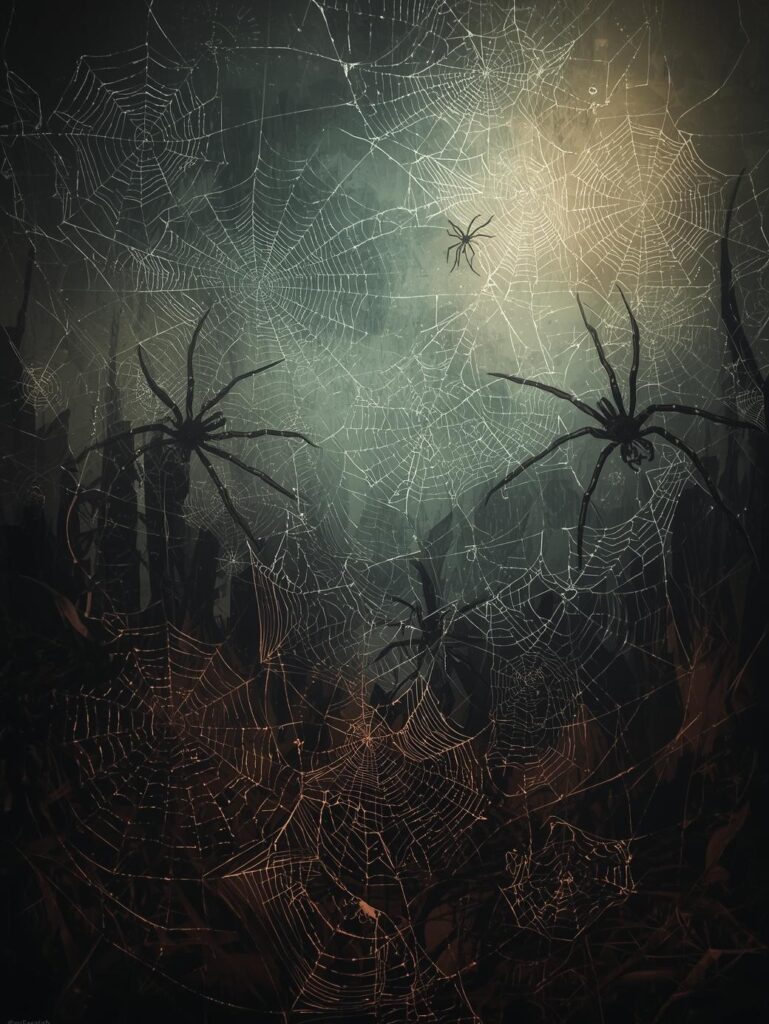
Spider dreams, while less common than snake dreams, contain important warnings about subtle threats and deceptive people in your life.
Learn more: Seeing Spiders in Dreams – Islamic Meaning and Interpretation →
This focused guide addresses:
- Small versus large spiders and their different meanings
- Spider webs and feelings of entanglement
- Black widows and poisonous spiders
- Killing spiders in dreams
- Spider infestations and what they represent
- The connection to weak but persistent enemies
Practical Etiquette for Your Dreams
How you handle dreams matters as much as interpretation itself. The Prophet (PBUH) gave specific guidance that protects your spiritual and psychological wellbeing.
Share Wisely
Good dreams deserve sharing, but choose your audience carefully. Tell people who love you and want good for you. Avoid sharing with envious individuals who might respond negatively.
Bad dreams require silence. Don’t give them power by discussing them. The Prophet commanded us to keep them private and follow the protection methods he taught.
After a Nightmare
Follow these prophetic steps immediately:
- Say “A’udhu billahi min ash-shaytaan ir-rajeem” (I seek refuge in Allah from the accursed Satan)
- Spit lightly three times to your left side
- Change your sleeping position
- Perform two rak’ahs of prayer if possible
- Know with certainty that this dream cannot harm you
The Prophet (PBUH) assured us these actions neutralize any negative effects from disturbing dreams.
Increasing Righteous Dreams
Maintain wudu before sleeping whenever possible. Recite Ayat al-Kursi and the last two verses of Surah al-Baqarah. Sleep on your right side, facing the Qibla if practical.
Your daytime spiritual state directly affects your nighttime dreams. Maintain honesty, avoid backbiting, and keep your heart pure. Righteous dreams come to righteous people.
Avoid eating late or overeating before bed. Physical comfort and digestive peace contribute to better sleep quality and clearer dreams.
Common Misconceptions About Islamic Dream Interpretation

Muslims often hold beliefs about dreams that contradict authentic Islamic teachings. Clearing these misconceptions protects you from innovation and superstition.
Misconception 1: All Dreams Are Spiritual Messages
The Reality: Most dreams fall into the psychological category (Hadith al-Nafs). Your brain processes daily experiences, stresses, and thoughts during sleep. Only a portion of dreams carry spiritual significance.
The Prophet (PBUH) explicitly categorized dreams into three types, acknowledging that not everything you see while sleeping comes from Allah or requires interpretation.
Misconception 2: Bad Dreams Mean Punishment or Sin
The Reality: Disturbing dreams often come from Shaytan to create fear and anxiety. They don’t indicate divine displeasure or punishment for your sins.
The prophetic instruction to dismiss bad dreams and seek Allah’s protection shows these dreams lack real spiritual weight. If they indicated punishment, the Prophet would have addressed them differently.
Misconception 3: Dream Interpretation Is Fortune-Telling
The Reality: Authentic Islamic dream interpretation differs completely from fortune-telling, which Islam strictly forbids. Dream interpretation relies on established principles from Quran and Sunnah.
True dreams may show future events, but interpreters don’t claim supernatural knowledge. They apply scholarly methodology to understand symbols within Islamic framework. Fortune-tellers claim hidden knowledge and often involve jinn or prohibited practices.

Misconception 4: Every Symbol Has One Fixed Meaning
The Reality: Context determines meaning. Water in dreams can represent knowledge, life, purification, or trials depending on its state, your interaction with it, and other dream elements.
Classical scholars emphasized considering the dreamer’s circumstances, spiritual state, and the complete dream narrative. Rigid “dream dictionaries” that assign single meanings to symbols oversimplify authentic Islamic interpretation.
Misconception 5: Only Scholars Can Interpret Dreams
The Reality: While complex dreams benefit from scholarly knowledge, Muslims can understand basic dream principles and interpret simple, clear dreams themselves.
The Prophet (PBUH) taught his companions to recognize true dreams, handle nightmares, and understand common symbols. You don’t need special authorization to apply these teachings to your own experiences.
Misconception 6: Seeing the Prophet (PBUH) in Dreams Always Means You Truly Saw Him
The Reality: The Prophet (PBUH) said, “Whoever sees me in a dream has truly seen me, for Satan cannot take my form.” However, scholars debate what constitutes “truly seeing” him.
Some dreams may involve someone claiming to be the Prophet while contradicting his teachings or appearance. True dreams of the Prophet align with his known characteristics and Islamic principles.
Misconception 7: You Must Act Immediately on Every Dream
The Reality: Only clear, undeniable true dreams require action—and even then, you should verify through consultation and istikharah prayer.
Making major life decisions solely based on dreams, especially ambiguous ones, contradicts Islamic methodology. Dreams supplement other forms of guidance; they don’t replace careful decision-making, consultation, and prayer.
Misconception 8: Recurring Dreams Always Carry Urgent Messages
The Reality: Recurring dreams often reflect persistent anxieties, unresolved emotional issues, or psychological patterns rather than urgent spiritual warnings.
While some recurring dreams may deserve attention, most indicate your mind processing ongoing concerns. If a dream truly contains divine guidance, Allah often makes the message clear rather than cryptic.
Misconception 9: You Need to Pay Someone to Interpret Your Dreams
The Reality: Classical Islamic scholars interpreted dreams as religious service, never as paid consultation. Commercializing dream interpretation contradicts the tradition of seeking knowledge and helping Muslims understand divine guidance.
Be extremely cautious of anyone charging fees for dream interpretation, especially those making guaranteed predictions or claiming special spiritual powers.

Misconception 10: Not Remembering Dreams Indicates Weak Faith
The Reality: Dream recall varies naturally among individuals and has no connection to spiritual status. Many righteous Muslims rarely remember their dreams.
The Prophet (PBUH) and his companions didn’t judge faith based on dream frequency. Your waking actions, character, and obedience to Allah matter infinitely more than your nighttime experiences.
Frequently Asked Questions About Islamic Dream Interpretation
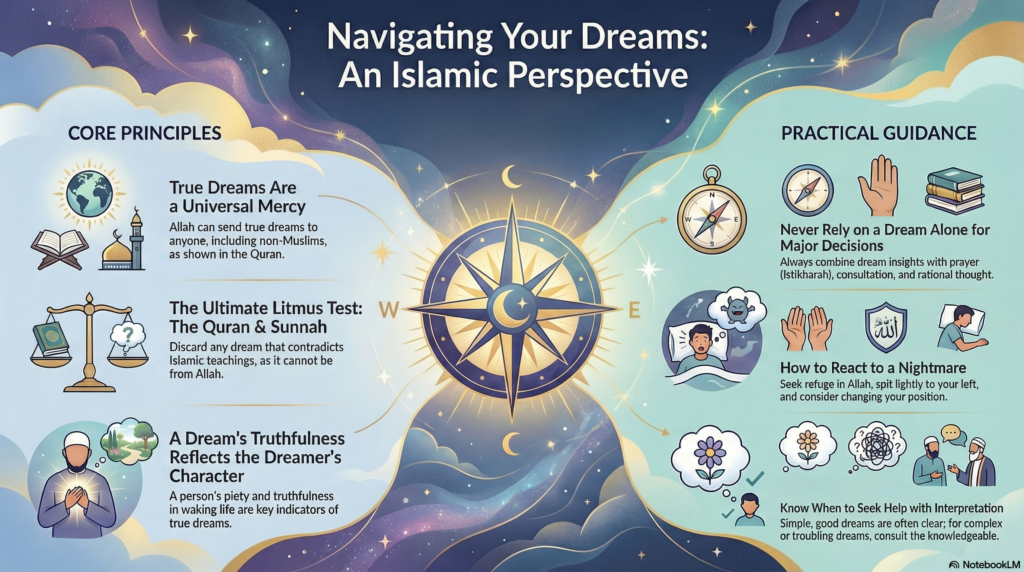
Can non-Muslims have true dreams from Allah?
Yes, the Quran provides examples of non-Muslims receiving true dreams. The king of Egypt saw the dream of seven fat and seven lean cows, which Prophet Yusuf interpreted. The prisoners with Yusuf also had true dreams.
Allah’s mercy extends to all His creation. However, proper interpretation and response require Islamic knowledge and framework.
Should I make major decisions based on dreams?
Dreams can provide one factor in decision-making but never the sole basis. Perform istikharah prayer, consult knowledgeable people, gather information, and use your intellect alongside any dream guidance.
Even Prophet Ibrahim, when commanded in a dream to sacrifice his son, verified the dream through repetition and consulted with his son before proceeding.
What if my dream contradicts Islamic teachings?
Discard it immediately. True dreams from Allah never contradict Quran or Sunnah. Any dream suggesting prohibited actions or contradicting Islamic principles comes from Shaytan or your own confused thoughts.
The Prophet’s form in dreams never commands wrongdoing. Dreams telling you to abandon prayer, harm others, or engage in sin are automatically false regardless of how they appear.
Do dreams during Ramadan have special significance?

Some scholars note that spiritual states elevate during Ramadan, potentially increasing the frequency of true dreams. However, Islam provides no specific texts establishing different interpretation rules for Ramadan dreams.
The three categories of dreams remain the same during Ramadan. Your heightened spiritual focus might make you more aware of dreams during this blessed month.
Can I ask Allah for a specific dream?
You can make any lawful dua, including asking Allah to guide you through righteous dreams. The Prophet (PBUH) taught specific recitations before sleep that increase the likelihood of good dreams.
However, Allah responds to all supplications in His perfect wisdom. He might answer through dreams, other means, or delay the response for your benefit.
What if I keep having the same nightmare?
Follow the prophetic method each time: seek refuge in Allah, spit to your left, change position, and pray if possible. Persistent nightmares might also indicate stress, trauma, or sleep disorders requiring medical attention.
Islam doesn’t prohibit seeking professional help for sleep issues. The Prophet (PBUH) encouraged treating illnesses, and mental health falls within that guidance.
Are dreams more truthful at certain times?
Classical scholars, citing weak hadiths, mentioned dreams near Fajr time as potentially more significant. However, authentic texts don’t establish specific times when dreams carry more weight.
The truthfulness of dreams depends on the dreamer’s character and spiritual state more than timing. The Prophet (PBUH) said the most truthful in speech have the truest dreams.
Can I interpret my own dreams?
You can apply basic Islamic principles to understand simple, clear dreams. If you dream of praying peacefully or reading Quran, you don’t need an expert to recognize these as positive signs.
Complex, ambiguous, or troubling dreams benefit from consultation with knowledgeable Muslims who understand classical interpretation methodology.
Why do I never remember my dreams?
Many factors affect dream recall: sleep depth, stress levels, when you wake during sleep cycles, and natural individual differences. Some people remember dreams vividly while others rarely do.
Neither situation indicates spiritual superiority or deficiency. Focus on your conscious worship and good deeds rather than worrying about forgotten dreams.
Should I keep a dream journal?
Recording significant dreams helps you notice patterns and remember details if you seek interpretation later. Write down meaningful dreams immediately after waking, as memory fades quickly.
However, don’t obsess over documenting every dream. Many don’t warrant recording or interpretation. Use judgment about which dreams deserve preservation.
Can dreams show me my future spouse?
Some Muslims report seeing future spouses in dreams, and classical scholars acknowledge this possibility. However, you cannot rely on dreams alone for such major decisions.
Follow proper Islamic protocols for finding a spouse: consultation with family, meeting in appropriate settings, istikharah, and rational evaluation of compatibility.
What if someone else dreams about me?
Another person’s dream about you might reflect their feelings, concerns, or perceptions regarding you. If they share a good dream, accept it positively. If negative, remind them not to share bad dreams.
You cannot control others’ dreams. Don’t let someone else’s dream—even if they claim it’s prophetic—unduly influence your life decisions without proper verification.
Do dreams predict death?
Some authentic reports describe Muslims seeing deceased relatives inviting them shortly before death. However, death-related dreams usually don’t predict actual death.
Dreams of death often symbolize transformation, the end of a life phase, or major changes. Interpreting these dreams literally without other signs is premature and causes unnecessary fear.
When Dreams Don’t Need Interpretation
Not every dream carries deep meaning. Your brain processes thousands of impressions daily, and many dreams simply reflect that mental housekeeping.
Obsessing over dreams creates unhealthy spiritual anxiety. The Prophet (PBUH) lived a balanced life and taught moderation in all things, including dream interpretation.
If you rarely remember dreams, that’s completely normal and doesn’t indicate spiritual deficiency. Focus on your waking spiritual practices—consistent prayer, Quran recitation, and good character matter far more than dream experiences.
Finding Qualified Interpreters
If you need help understanding a significant dream, seek knowledge from trustworthy sources. Qualified interpreters possess deep knowledge of Quran, Hadith, and classical Islamic scholarship. They have good character and understand cultural context.
Red flags include anyone charging money for dream interpretation, claiming supernatural powers, or making definitive predictions about your future. True Islamic dream interpretation offers guidance within the boundaries of authentic knowledge, not fortune-telling.
Most scholars throughout history interpreted dreams as acts of charity and religious service, never as paid services. Be wary of commercialized “dream interpretation” that contradicts this tradition.
Balancing Spiritual and Psychological Understanding

Islam recognizes that humans operate on multiple levels—spiritual, psychological, and physical. The three-category dream classification acknowledges both divine communication and natural mental processes.
If you experience persistent nightmares affecting your daily life, trauma-related dreams, or sleep disorders, seek professional medical help. The Prophet (PBUH) said, “Seek treatment, for Allah has not created a disease without creating its cure.”
True Islamic practice integrates spiritual awareness with practical wisdom. You don’t have to choose between respecting dreams as potentially meaningful and maintaining psychological health.
Your Dreams in Perspective
Dreams form one small part of a complete Islamic life. They shouldn’t dominate your spiritual focus or daily decision-making. The Quran, prayer, good character, and beneficial actions matter infinitely more than dream interpretation.
When you do experience a clear, beautiful dream that feels like guidance from Allah, accept it with gratitude. When nightmares disturb your sleep, use the prophetic protection methods and move forward without dwelling on them.
And when you simply dream about yesterday’s conversation or tomorrow’s worries, let those dreams fade like they naturally do—because sometimes a dream about missing your bus is just a dream about missing your bus.
Continue Your Journey in Islamic Dream Understanding
This pillar guide provides foundational knowledge for understanding dreams according to authentic Islamic sources. For deeper exploration of specific dream scenarios, visit our specialized guides:
- Islamic Interpretation of Winning Money in Dreams – Understanding wealth and prosperity visions
- Islamic Dream Interpretation of Pregnancy – Comprehensive pregnancy dream meanings
- What Giving Birth in Dreams Means in Islam – Detailed childbirth symbolism
- Complete Islamic Interpretation of Snake Bite Dreams – Protection and warning signs
- Seeing Spiders in Dreams – Islamic Meaning – Understanding subtle threats and deception
The Prophet Muhammad (PBUH) taught us to seek beneficial knowledge. Understanding dreams according to Quran and Sunnah gives you that benefit while protecting you from superstition, innovation, and unnecessary anxiety about the world of sleep.
May Allah grant us understanding, protect us in wakefulness and sleep, and guide us to truth in all our affairs.
Every Dream Science Dream Scenario Interpreted
✦ Positive
⚠ Warning
● Neutral
◆ Contextual
What Three Classical Scholars Say About Dream Science Dreams
Critical Mistakes When Interpreting Dream Science Dreams
- ✗Assuming every vivid dream is spiritually significantVividness is not a marker of divine origin. Some of the most lifelike dreams are purely psychological. Use the emotional aftermath and spiritual alignment, not visual clarity, as your guide.
- ✗Interpreting without knowing the dreamer’s contextThe same symbol means different things for different people. A qualified interpreter always asks about the dreamer’s life situation, health, spiritual state, and emotional climate before offering any meaning.
- ✗Using non-Islamic dream dictionariesWestern or new-age interpretations directly contradict the Islamic scholarly tradition. Consulting them for Islamic dream meanings produces conclusions that classical scholars would reject outright.
- ✗Sharing a bad dream widelyThe Prophet ﷺ warned that a nightmare shared with the wrong person can be ‘broken’ into harm. Never share a disturbing dream on social media or with people who may respond with envy or negativity.
- ✗Acting on dreams against Quran and SunnahNo dream — however vivid or emotionally powerful — overrides Islamic law. If a dream instructs you toward something prohibited, it is from Shaytan, not Allah.
🌙 Track Your Dreams the Islamic Way
Start an Islamic Dream Journal to record patterns, apply classical interpretation, and see which dreams come true over time.
📚 Related Islamic Dream Guides
📚 Authoritative Islamic Sources Referenced
- Ibn Sirin, Muhammad. Tafsir al-Ahlam al-Kabir. Beirut: Dar al-Kutub al-Ilmiyyah.
- Al-Nabulsi, Abd al-Ghani. Ta’tir al-Anam fi Tafsir al-Ahlam. Cairo: Dar al-Hadith.
- Al-Bukhari, Muhammad. Sahih al-Bukhari, Kitab al-Ta’bir. View Hadith 6985 on Sunnah.com ↗
- Muslim ibn al-Hajjaj. Sahih Muslim, Kitab al-Ru’yā. View Hadith 5901 on Sunnah.com ↗
- Ibn Qutaybah, Abd Allah. Ta’bir al-Ru’yā. Beirut: Dar al-Kutub al-‘Ilmiyyah.
- Al-Qurtubi, Muhammad. Al-Tadhkirah fi Ahwal al-Mawta.
- Qur’an — multiple Surahs referenced in article. Read on Quran.com ↗