 The Dream Explainer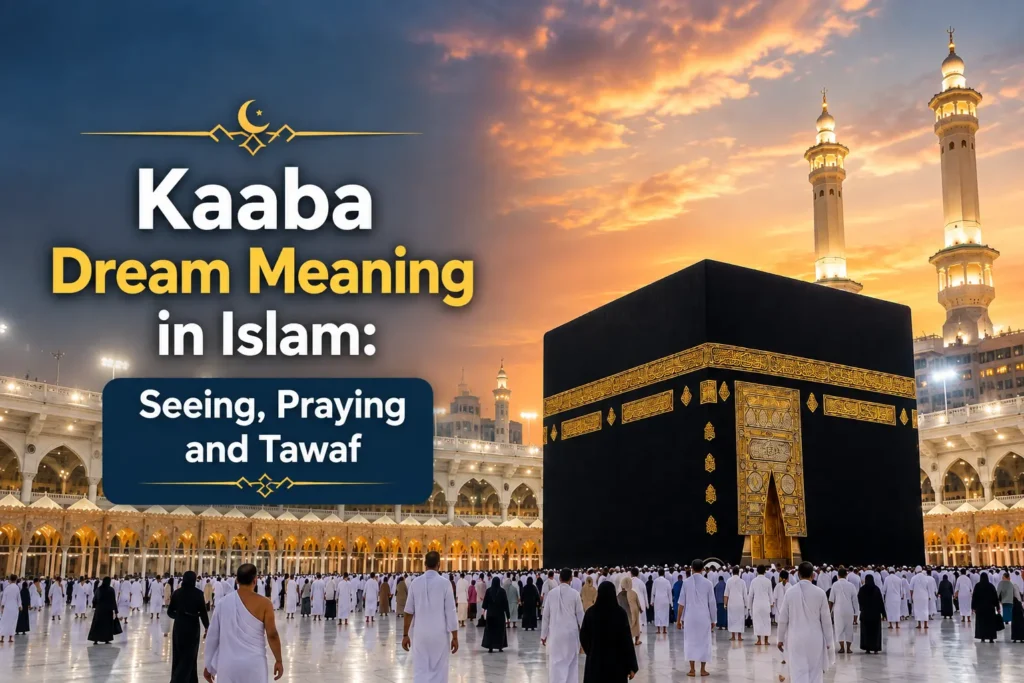
Kaaba dream meaning in Islam may relate to spiritual direction, repentance, worship, safety, Muslim identity, or longing to visit Makkah. Touching the Kaaba, praying nearby, performing tawaf, or crying there could strengthen themes of humility, hope, and closeness to Allah.
However, the dream does not guarantee Hajj, forgiveness, an accepted du’a, or another future event. Its meaning depends on what happened, how you felt, and what is happening in your life. Allah knows best.
What Does Seeing the Kaaba in a Dream Mean?
Seeing the Kaaba in a dream may reflect a desire for guidance, spiritual stability, repentance, safety, or renewed worship. Because Muslims face the Kaaba in salah, it may naturally symbolize direction and connection with the Muslim ummah.
For someone hoping to perform Hajj or Umrah, the dream could also reflect sincere longing for Makkah. Recent videos, photographs, pilgrimage planning, memories, or conversations may influence what appears during sleep.
Islam does not give one fixed meaning for every Kaaba dream. The dream should be understood as a possible reflection rather than certain knowledge. For broader guidance, read the Islamic dream interpretation guide.
Allah describes the Sacred House as a place of return and security and connects it with tawaf, prayer, bowing, and prostration.
See Qur’an 2:125 and Qur’an 3:96–97.
A peaceful Kaaba dream may encourage faith and goodness, but it does not prove that Allah has promised pilgrimage, marriage, healing, wealth, forgiveness, or the acceptance of a particular du’a.
Seeing the Kaaba in a Dream
Seeing the Kaaba clearly and feeling peaceful may reflect spiritual direction, reassurance, renewed faith, or a desire to return to Allah. It could be especially meaningful if you have recently felt confused or spiritually distracted.
Because the Kaaba gives Muslims a shared direction in prayer, the dream may invite you to consider what currently guides your choices and priorities.
Seeing the Kaaba From Far Away
A distant Kaaba may reflect an important spiritual goal that feels difficult to reach. This could involve regular salah, repentance, Islamic knowledge, Hajj, Umrah, or greater closeness to Allah.
Distance does not necessarily suggest rejection. It may simply reflect longing, preparation, delay, or the steps still needed to reach a goal.
Standing Close to the Kaaba
Standing close to it may reflect comfort, safety, humility, or a strong need for Allah’s mercy. The emotional tone of the dream matters more than physical distance alone.
Touching the Kaaba in a Dream
Touching the Kaaba may reflect closeness, hope, repentance, comfort, or a deeply felt need. Someone facing hardship may dream of holding onto something sacred as an expression of dependence upon Allah.
If you were making du’a while touching it, the dream could encourage sincerity and patience. It should not be treated as proof that the request will happen exactly as expected.
Holding the Covering of the Kaaba
Holding the kiswah may reflect a search for mercy, protection, reassurance, or spiritual stability. It could also express a deep desire to visit the Sacred House.
Praying Near the Kaaba in a Dream
Praying near the Kaaba may reflect devotion, humility, spiritual focus, or a desire for accepted worship. It may also encourage you to examine the quality and consistency of your real salah.
If the prayer felt peaceful and complete, it could suggest spiritual order or renewed commitment. If you were distracted or unable to finish, it may reflect stress, guilt, or difficulty maintaining focus.
An interrupted prayer does not prove rejection by Allah. It may simply highlight something that is disturbing your worship or emotional peace.
Performing Tawaf Around the Kaaba
Performing tawaf in a dream may reflect devotion, spiritual discipline, Muslim unity, returning to Allah, or longing for Hajj and Umrah.
Since tawaf centres on the Sacred House, the dream may invite reflection on what has become central in your own life.
Peaceful Tawaf
A peaceful and orderly tawaf may suggest focus, belonging, and steady spiritual effort. It may also arise from a strong wish to perform pilgrimage.
Unable to Complete Tawaf
An incomplete tawaf may reflect distraction, delay, uncertainty, or an unfinished spiritual goal. It does not necessarily predict that Hajj or Umrah will be prevented.
For dreams involving ihram, travel, Arafat, Zamzam, or completing pilgrimage, read Hajj and Umrah dream meaning in Islam.
Crying at the Kaaba in a Dream
Crying at the Kaaba may reflect repentance, emotional release, grief, gratitude, longing, or hope in Allah’s mercy. Such a dream may feel especially powerful when someone is carrying a private hardship.
Quiet tears may suggest humility or relief. Intense crying could reflect accumulated stress, unresolved sadness, or a deep desire for help.
Crying While Making Du’a
This may reflect a concern that weighs heavily upon your heart. The dream could encourage sincere du’a, patience, repentance, and trust in Allah.
It does not prove that the du’a has already been accepted in the form you expect.
Seeing the Kaaba Inside Your House
Seeing the Kaaba inside your home may reflect a desire for the household to be centred on worship, prayer, Qur’an, peace, hospitality, or Islamic values.
If family members were praying nearby, the dream could suggest concern for shared worship or spiritual harmony within the home.
A dream does not give your home the sacred status or religious rulings of the actual Kaaba or Masjid al-Haram.
Being Unable to See the Kaaba
Searching for the Kaaba but being unable to find or see it may reflect uncertainty, distraction, spiritual frustration, emotional exhaustion, or fear of losing direction.
For someone planning pilgrimage, it may also arise from worries about finances, health, travel, visas, timing, or whether the opportunity will come.
The dream should not automatically be read as rejection by Allah. Awareness of spiritual distance may itself become an invitation to return.
Something Blocked the Kaaba
A wall, crowd, building, or another obstruction may represent responsibilities, habits, fears, or worries that seem to stand between you and spiritual focus.
Rather than fearing the image, consider one real obstacle you can begin addressing calmly.
Seeing the Kaaba in an Unusual Location
Seeing the Kaaba somewhere other than Makkah may connect worship, faith, identity, or moral direction with that place. The location and your emotional response provide important context.
Seeing it near your workplace could prompt reflection on honesty, prayer, income, or responsibility. Seeing it in your neighborhood may reflect concern for community, belonging, or access to worship.
Dreams also combine familiar images in unusual ways. The scene may have no precise symbolic meaning beyond your mind joining important places and emotions.
Seeing the Kaaba Inside a Mosque
This may strengthen themes of prayer, community, and spiritual focus. It could also be ordinary dream imagery combining two sacred spaces.
For related symbolism, read about seeing a mosque in a dream in Islam.
Kaaba Dream Meanings at a Glance
What If the Dream Was Frightening?
Seeing the Kaaba damaged, hidden, empty, changed, or surrounded by chaos can be upsetting. It should not be treated as a prediction about Makkah, the Muslim community, disasters, or the end times.
The scene may reflect anxiety, guilt, upsetting news, fear for the ummah, or a disturbing dream intended to cause sadness.
Seek refuge with Allah, lightly spit or blow to the left three times, avoid spreading the dream, and do not let frightening interpretations control you.
Read what to do after a bad dream in Islam for a fuller explanation.
Psychological Meaning
The Kaaba carries powerful associations with safety, belonging, forgiveness, worship, direction, and pilgrimage. Someone who watches Hajj broadcasts, plans Umrah, misses a previous visit, or feels spiritually disconnected may naturally dream about it.
This does not make the dream worthless. It may reveal what the heart is longing for or worrying about without predicting the future.
How Should You Respond?
- Thank Allah if the dream felt peaceful and encouraged goodness.
- Turn the feeling into action by improving salah, making tawbah, reading Qur’an, giving charity, or preparing responsibly for pilgrimage.
- Do not make major decisions about marriage, travel, money, health, or family matters from the dream alone.
Frequently Asked Questions
Is seeing the Kaaba in a dream a good sign?
It may be spiritually encouraging, especially if the dream felt peaceful. It could reflect faith, guidance, repentance, safety, or longing for Makkah. It is not a guaranteed sign of a future event. Allah knows best.
Does seeing the Kaaba mean I will perform Hajj or Umrah?
Not necessarily. The dream may reflect a sincere wish to visit Makkah, but it does not guarantee pilgrimage. Continue making du’a and take practical steps if Hajj or Umrah is possible.
What does touching the Kaaba in a dream mean?
Touching the Kaaba may reflect hope, comfort, repentance, closeness, or a deeply felt need. It does not prove that a particular request will be fulfilled exactly as expected.
What does performing tawaf in a dream mean?
Tawaf may reflect devotion, spiritual discipline, returning to Allah, unity, or longing for pilgrimage. The emotional tone and whether the tawaf was completed may change the reflection.
What does praying near the Kaaba mean?
Praying near the Kaaba may suggest humility, spiritual focus, or concern for accepted worship. It may encourage you to strengthen your actual salah.
What does crying at the Kaaba mean?
Crying may reflect repentance, sadness, gratitude, relief, or hope in Allah’s mercy. It does not provide certainty that a particular du’a has already been accepted.
What does seeing the Kaaba inside your house mean?
It may reflect a desire for a home centred on prayer, Qur’an, peace, hospitality, and Islamic values. The meaning is symbolic.
What does it mean if you cannot see the Kaaba?
This may reflect confusion, distraction, spiritual frustration, travel worries, or difficulty finding direction. It should not automatically be interpreted as rejection by Allah.
Final Reflection
Seeing the Kaaba in a dream may reflect spiritual direction, repentance, worship, safety, Muslim identity, or longing to visit Makkah.
Receive what encourages goodness, but do not treat the dream as a promise or hidden knowledge. Let it lead toward better salah, sincere du’a, repentance, gratitude, and calm reflection.
Allah knows best.