 The Dream Explainer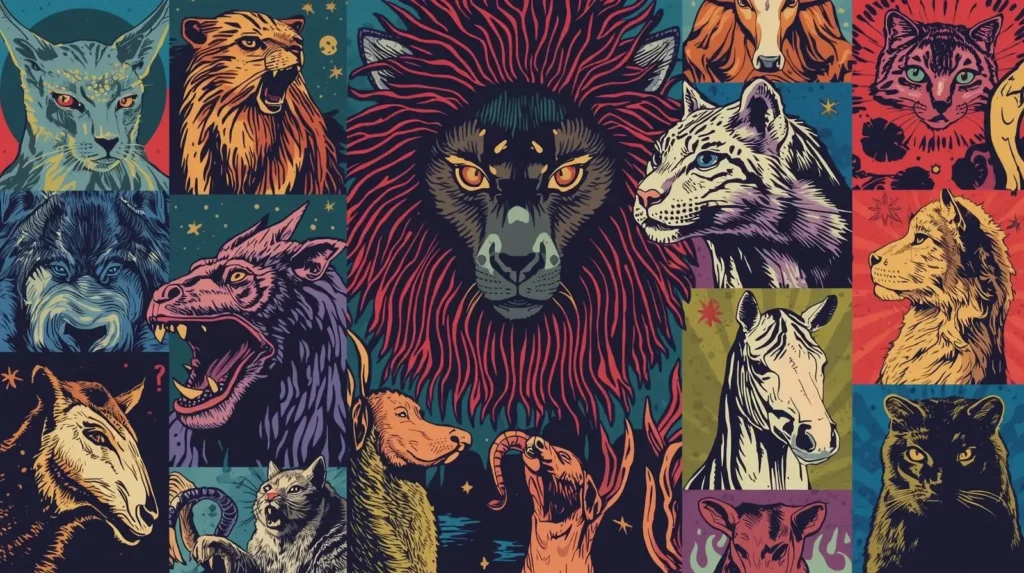
Seeing animals in a dream in Islam can sometimes carry meaning, but not every animal dream is a sign.
First consider whether the dream was a good dream, a disturbing dream, or something influenced by your own thoughts and experiences. Then consider what the animal was doing, how you felt, and what is happening in your waking life.
A calm animal, attacking animal, dead animal, or guiding animal may each suggest something different. These are possibilities for reflection rather than fixed predictions. Allah knows best.
Dreams about animals can feel unusually vivid because animals may appear powerful, threatening, peaceful, familiar, or completely unexpected.
Islam, however, does not teach Muslims to treat every animal in a dream as a fixed symbol or prediction. The dream itself, the dreamer’s circumstances, and the type of dream all matter.
The Core Islamic Rule on Dream Interpretation
The Prophet Muhammad ﷺ taught that dreams do not all have the same origin.
Sahih Muslim describes three broad categories: a good dream that may be glad tidings from Allah, a distressing dream from Shaytan, and a dream arising from what occupies a person’s own mind.
May be glad tidings from Allah and should be received with gratitude rather than exaggerated certainty.
A frightening or chaotic dream may be from Shaytan and should be answered with the Prophetic guidance for disliked dreams.
Stress, fears, memories, conversations, animals you recently saw, and ordinary experiences may influence dream content.
The animal itself cannot tell us with certainty which type of dream a person experienced.
Read Sahih Muslim 2263a on the three types of dreams.
For the broader framework, read our guide to interpreting dreams in Islam.
Identify the type of dream before trying to interpret the animal. The dream’s overall context matters more than simply looking up a symbol.
What May Seeing Animals in a Dream Mean in Islam?
Animals in dreams may sometimes bring to mind qualities such as strength, fear, vulnerability, loyalty, movement, danger, patience, freedom, responsibility, or protection.
But the same animal may carry a completely different feeling in another dream. A calm lion is not the same as an attacking lion. A dog walking peacefully beside someone creates a different dream from a dog biting or chasing them.
The animal’s behavior, the dreamer’s emotional response, waking circumstances, and the wider dream should therefore be considered together.
No animal should automatically be treated as proof of an enemy, future event, spiritual problem, death, wealth, marriage, or another guaranteed outcome.
How Should Muslims Understand an Animal Dream?
A simple five-step approach can help keep interpretation cautious and useful.
Consider whether it seemed peaceful, distressing, or closely connected with thoughts and experiences already occupying your mind.
Was it attacking, chasing, guiding, biting, speaking, standing calmly, running away, or dying?
Fear, peace, confusion, relief, sadness, affection, or awe may provide important context.
Stress, relationships, work, family concerns, grief, fear, travel, health concerns, and recent experiences may influence the dream.
Only after considering the dream as a whole should you look at traditional associations connected with the animal. Symbol without context can easily mislead.
What Do Common Animals Mean in Islamic Dreams?
Later Islamic dream literature contains associations for many animals. These are part of the historical interpretive tradition rather than fixed Qur’anic or Prophetic rules.
The table below should therefore be treated as a starting point for reflection rather than a set of guaranteed meanings.
| Animal | Possible reflection | Tone | Read more |
|---|---|---|---|
| Lion | Power, authority, fear, a strong opponent, or overwhelming pressure. | Mixed | Lion dreams |
| Horse | Honor, momentum, dignity, striving, movement, or strength. | Often positive | Horse dreams |
| Bird | Movement, elevation, longing, freedom, or changing circumstances. | Mixed | Bird dreams |
| Snake | Fear, danger, conflict, hostility, or a threatening situation. | Caution | Snake dreams |
| Cat | Comfort, household life, trust, privacy, affection, or caution. | Mixed | Cat dreams |
| Dog | Loyalty, companionship, protection, fear, conflict, or crossed boundaries. | Mixed | Dog dreams |
| Spider | Fragility, entanglement, weakness, hidden stress, or something that feels difficult to escape. | Mixed / caution | Spider dreams |
| Cow | Changing conditions, livelihood, ease, hardship, or periods of life. | Mixed | General guide |
| Camel | Patience, endurance, burden, travel, or a long-term responsibility. | Mixed | General guide |
| Fish | Provision, opportunity, livelihood, benefit, or something sought after. | Mixed / positive | Fish dreams |
Common Animal Dream Scenarios
Seeing a Lion in a Dream
A lion may reflect power, authority, fear, a strong opponent, or a situation that feels difficult to challenge.
An attacking lion creates a different meaning from a calm lion standing at a distance. The behavior of the animal matters more than the symbol alone.
Read our detailed lion dream meaning in Islam guide.
Seeing a Horse in a Dream
Horse imagery may bring to mind dignity, movement, striving, strength, status, or forward momentum.
The horse’s behavior, condition, movement, and the dreamer’s relationship with it can change the reflection considerably.
Read our horse dream meaning in Islam guide.
Seeing a Bird in a Dream
Birds may reflect movement, longing, freedom, elevation, distance, or changes in circumstances.
The species and behavior matter. A flying bird, injured bird, bird entering a home, and aggressive bird should not automatically be interpreted in the same way.
Read our bird dream meaning in Islam guide.
Seeing a Snake in a Dream
In later Islamic dream literature, snakes are often associated with fear, hostility, conflict, or danger. But this should not automatically be used to identify a real person as an enemy.
A snake that bites differs from one that is killed, one that simply appears, or one that remains at a distance.
Start with snake dream meaning in Islam. For specific scenarios, see killing a snake in a dream and snake bite dream meaning in Islam.
Seeing a Cat in a Dream
A cat may bring to mind affection, household life, comfort, privacy, trust, independence, or caution depending on what happened.
A calm cat and an aggressive or biting cat should not be treated as carrying the same meaning.
Read the full cat dream meaning in Islam guide.
Seeing a Dog in a Dream
A dog may reflect loyalty, companionship, protection, fear, conflict, hurtful behavior, or boundaries depending on the animal’s behavior and the dreamer’s own experience.
May reflect companionship, support, familiarity, loyalty, or comfort.
May reflect fear, pressure, avoidance, or something that continues to demand attention.
Could reflect emotional hurt, conflict, criticism, betrayal, or feeling unsafe.
Should not automatically be treated as evidence of jinn, sihr, possession, or another supernatural cause.
Read our complete dog in a dream in Islam guide.
Seeing Spiders in a Dream
Spiders may bring to mind fragility, entanglement, hidden stress, vulnerability, or something that appears stronger than it really is.
Surah Al-Ankabut uses the spider’s house as an example of weakness. That Qur’anic imagery should not, however, be converted into a fixed rule for every spider dream.
Read Qur’an 29:41 and our spider dream meaning in Islam guide.
Seeing an Unknown or Strange Creature in a Dream
An unknown creature does not automatically have a mystical or supernatural meaning.
Strange dream imagery may arise from uncertainty, stress, fear, memories, recent media, or something the mind combines during sleep.
Focus first on what the creature did, how you felt, and whether the dream was peaceful or disturbing. Avoid forcing a specific identity or supernatural explanation onto something unclear.
Seeing Many Different Animals in a Dream
Seeing many animals in one dream may reflect complexity, multiple responsibilities, many relationships, competing pressures, or an emotionally busy period.
If the animals were calm and ordered, the dream may feel very different from a chaotic scene involving animals fighting, escaping, or attacking.
Read the dream as a whole rather than assigning separate predictions to every animal.
Animal Attack Dreams in Islam
An animal attack dream may reflect fear, emotional pressure, conflict, vulnerability, or a distressing dream. It does not automatically mean that harm will occur in waking life.
If you dreamed of an aggressive dog, read our detailed guide to dog attacks, chasing, and biting in dreams. It covers escaping, multiple dogs, and Islamic guidance after frightening dreams.
- Seek refuge in Allah from Shaytan and from the evil of the dream.
- Spit dryly or blow lightly to the left three times.
- Avoid spreading the disturbing dream among people.
- Change sides or get up to pray if you remain distressed.
- Do not turn the dream into a prediction of future harm.
The Prophetic guidance for disliked dreams is reported in Sahih Muslim 2261.
For fuller guidance, read what to do after a bad dream in Islam.
Seeing a Zoo in a Dream
A zoo dream may bring to mind controlled power, observation, confinement, social pressure, or being surrounded by many different personalities or concerns.
The meaning depends heavily on what the animals were doing. Calm animals inside their enclosures create a different scene from animals escaping or attacking people.
Seeing Rare Animals in a Dream
Rare animals need additional caution because many do not have well-established associations in Qur’an, authentic hadith, or widely cited early Islamic dream material.
In such cases, focus more on what the animal was doing and how the dream felt than on trying to invent a special meaning for the species.
Seeing a Hippopotamus in a Dream
A hippopotamus may appear heavy, powerful, territorial, calm, aggressive, or overwhelming depending on the scene.
There is no established Qur’anic or authentic Prophetic dream interpretation assigning the hippopotamus one fixed meaning. Its behavior and the dreamer’s emotions therefore matter more than the species name.
If an unusual animal has no clear basis in established Islamic dream literature, it is better to remain cautious than to create a confident interpretation simply because the animal appeared vividly.
Seeing a Bear in a Dream in Islam
Seeing a bear in a dream may bring to mind strength, intimidation, defensiveness, isolation, protection, or a powerful situation that feels difficult to approach.
Bears are not among the clearest dream symbols established through Qur’an or authentic hadith, so the meaning should not be treated as fixed.
May reflect fear, confrontation, overwhelming pressure, or a distressing dream.
Could reflect avoidance, pressure, or something that feels difficult to escape.
May bring to mind guarded strength, authority, endurance, or power that is present without directly threatening you.
May reflect strength, heaviness, territorial behavior, or a demanding responsibility depending on the context.
The color should not automatically be treated as a supernatural warning or proof of future harm.
Its unusual appearance may make the dream memorable, but there is no fixed Islamic interpretation for a white or polar bear.
If the bear was frightening, follow the Sunnah response for a disliked dream rather than assuming that it predicts an actual enemy, attack, or future event.
Seeing Wild Animals or Big Cats in a Dream
Wild animals such as leopards, jaguars, tigers, and other powerful predators may bring to mind fear, strength, danger, competition, authority, or circumstances that feel difficult to control.
There is no authenticated rule assigning every predatory animal one automatic meaning.
May reflect pressure, fear, confrontation, vulnerability, or a distressing dream.
Could relate to avoidance, anxiety, pressure, or a concern that feels difficult to escape.
May reflect awareness of power, authority, confidence, or something formidable that is present but not attacking.
May reflect multiple pressures or an emotionally complex situation rather than several separate predictions.
A leopard, jaguar, tiger, or other predator in a dream should not be used to identify a real person as an enemy or to predict future harm.
Seeing Dead Animals in a Dream in Islam
Seeing a dead animal does not automatically predict death, punishment, disaster, or another harmful event.
Depending on the context, the image may reflect an ending, emotional exhaustion, loss of strength, the end of a fear, or simply disturbing dream imagery.
A dead animal in a dream may relate symbolically to something ending, but it should never automatically be converted into a prediction that a person will die.
What Does the Qur’an Say About Animal Dreams?
One of the clearest Qur’anic examples occurs in Surah Yusuf. The king saw seven fat cows being eaten by seven lean cows, and Prophet Yusuf عليه السلام interpreted the dream in relation to coming years of abundance and hardship.
Read Qur’an 12:43–49.
This demonstrates that animal imagery can carry meaning by Allah’s permission. It does not establish a universal dictionary where every animal always means the same thing.
The Qur’an also contains animal imagery outside dreams, including the spider’s house in Qur’an 29:41 and the charging horses in Qur’an 100:1–3.
A Qur’anic passage involving an animal should not automatically be turned into a fixed interpretation for every dream containing that animal.
How to Respond After an Animal Dream
If the Dream Felt Good
Thank Allah for any comfort or hope you felt. Take beneficial encouragement from the dream without treating it as a guaranteed prediction.
If the Dream Felt Frightening
Follow the Prophetic guidance for disliked dreams: seek refuge in Allah, spit dryly or blow lightly to the left three times, avoid spreading the dream, and do not let frightening interpretations control your decisions.
Read what to do after a bad dream in Islam for the full guidance.
When Should You Seek Islamic Dream Interpretation?
You may seek careful interpretation when a dream felt unusually clear, meaningful, repeated, or connected with an important situation in your life.
Avoid interpreters who use fear, superstition, amulets, occult practices, or claims of certain knowledge of the unseen.
Do not use an animal dream alone to accuse another person, predict illness or death, make a religious ruling, diagnose sihr or possession, or make a major life decision.
Frequently Asked Questions
Are animal dreams always meaningful in Islam?
No. Dreams may be good dreams, disturbing dreams, or dreams influenced by a person’s own thoughts and experiences. Not every animal dream requires interpretation.
Can seeing an animal be a true dream from Allah?
It may be, but the appearance of an animal alone cannot prove that a dream was a true dream. The wider context should be considered.
What does seeing many animals in a dream mean?
It may reflect complexity, multiple responsibilities, relationships, emotional pressure, or several concerns occupying the mind. The behavior of the animals and the overall feeling of the dream matter.
What does an animal attacking me in a dream mean?
An animal attack may reflect fear, pressure, conflict, vulnerability, or a disturbing dream. It does not automatically predict an attack or future harm.
What does seeing a bear in a dream mean in Islam?
A bear may bring to mind strength, intimidation, defensiveness, pressure, or a powerful situation. A bear attack, calm bear, black bear, brown bear, or polar bear should not automatically be given the same meaning.
What do wild animals or big cats mean in a dream?
Wild animals such as leopards, jaguars, and tigers may reflect fear, strength, danger, competition, authority, or something that feels difficult to control. The animal’s behavior and the dreamer’s circumstances matter.
What does seeing a hippopotamus in a dream mean?
There is no established fixed Islamic meaning for a hippopotamus dream. Consider whether the animal appeared powerful, territorial, calm, aggressive, or overwhelming and how you felt during the dream.
Do dead animals in dreams mean someone will die?
No. A dead animal in a dream does not reliably predict real death. The imagery may relate to an ending, exhaustion, loss, or simply a disturbing dream.
Are animal interpretations attributed to Ibn Sirin Qur’an or hadith?
No. Interpretations associated with Ibn Sirin and other later Muslim interpreters belong to the historical scholarly tradition of dream interpretation. They are not themselves Qur’anic verses or authenticated Prophetic explanations.
Should I use this page for every animal dream?
This page is a useful starting point for the Islamic framework. When a specific animal such as a snake, lion, cat, dog, bird, fish, horse, or spider was the main part of the dream, use the dedicated guide for that animal.
Final Reflection
Animal dreams may feel meaningful, frightening, or simply unusual, but they should not be reduced to fixed predictions. Consider the type of dream, the animal’s behavior, your emotions, and your waking circumstances before seeking a symbolic meaning. Use the dedicated animal guides when a particular species or action was central, follow the Sunnah after a disturbing dream, and avoid claiming certainty about the unseen. Allah knows best.