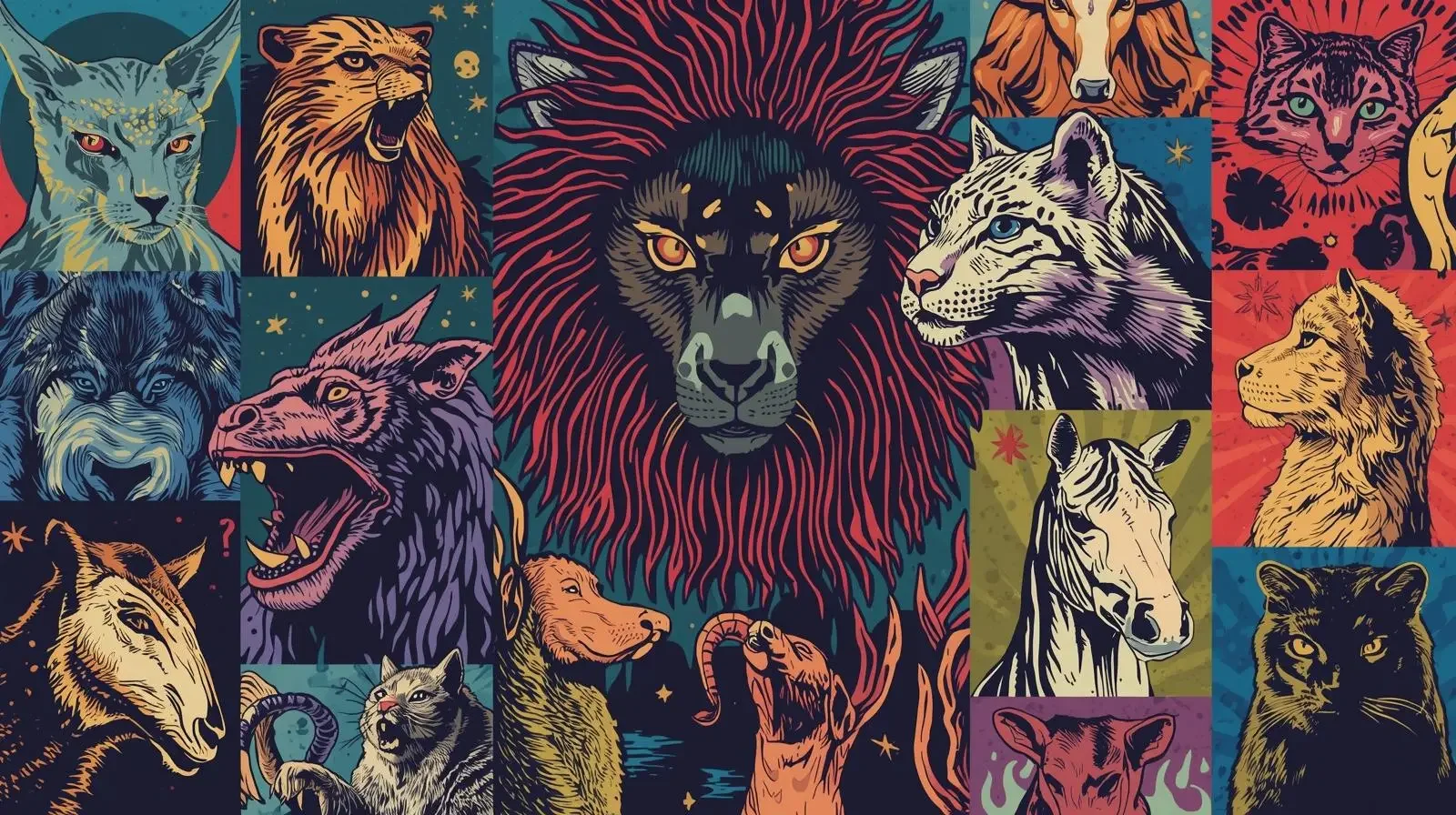
Seeing animals in dream Islamic interpretation begins with one important truth: not every animal dream carries a message. In Islam, some dreams are true and meaningful, some come from Shaytan, and some come from your own thoughts, fears, and daily life.
That is why you should never rush to force a meaning onto every lion, snake, bird, horse, or strange creature you see in sleep. Islam teaches balance, caution, and reliance on Allah.
This guide explains how Muslims should understand animal dreams through the Quran, sahih Hadith, and the classical Islamic dream tradition. It also helps you know when a dream matters, when it does not, and what to do after a good or bad dream.
This pillar page gives you the Islamic framework for understanding animal dreams — the three dream types, the five-step method, and the classical scholarly tradition. For detailed meanings of specific animals, use the linked articles throughout this guide.
The Core Islamic Rule on Dream Interpretation
Islam does not teach Muslims to treat every dream as a hidden code. The Prophet ﷺ taught that dreams fall into three categories. You can read the hadith in Sahih Muslim.
Ru’ya — True Dream
- A good or true dream from Allah
- Calm, clear, coherent
- Lingering sense of peace or awe
Hulm — Disturbing Dream
- A disturbing dream from Shaytan
- Chaotic, dark, distressing
- Woke up anxious or afraid
Hadith al-Nafs — Dream from Your Own Thoughts
The third type comes from your own thoughts and inner state — stress, desire, fear, or what you experienced during the day. Not every dream carries a message. Some simply reflect what you already carry inside.
So before asking what an animal means, ask what kind of dream you saw. Was it calm, clear, and weighty? Or was it chaotic, frightening, and restless? That question comes first in Islamic dream interpretation.
Identify the dream type before seeking meaning. The type of dream matters more than the symbol inside it.
If you need the full foundation first, read our main guide to Islamic dream interpretation.
What Does Islam Say About Seeing Animals in Dreams?
In Islamic tradition, animals in dreams can sometimes carry symbolic meaning. But they do not carry one fixed meaning in every case. The same animal can point to strength in one dream, fear in another, and no deeper meaning at all in a third. The animal’s behaviour matters. Your emotional state matters. Your life situation matters. The type of dream matters most of all.
This is why trustworthy Islamic interpretation never works like a chart of fixed symbols.
Dream interpretation in Islam is a matter of reflection, not certainty. No animal carries one automatic meaning. The classical scholars themselves gave different readings to the same animal based on the dreamer’s circumstances, and they often said “if the dreamer is such-and-such a person” before offering any interpretation.
How Should Muslims Understand Animal Dreams?
Use this five-step Islamic dream method every time you want to reflect on an animal dream.
True dream (ru’ya), disturbing dream (hulm), or dream from the nafs. This single step filters out most dreams that do not need interpretation at all.
What did the animal do? Attack, guide, chase, bite, speak, stand calmly, die? The action shapes the reading far more than the species.
Fear, peace, relief, awe, confusion, sadness — your emotional state upon waking is one of the clearest signs of whether a dream is a ru’ya or a hulm.
Conflict, health, work, marriage, travel, grief, spiritual struggle — what are you currently carrying? A dream often reflects what is already present.
Only after context becomes clear should you look at what the animal itself traditionally represents. Symbol without context leads to confusion.
This method protects you from confusion and from exaggerated interpretations. For a deeper understanding of the first step, see our guide on how Islam classifies dreams.
What Shapes the Meaning of an Animal in a Dream?
The Animal’s Behaviour
A calm animal does not carry the same meaning as an attacking one. A guiding animal does not mean the same as a dead or wounded one. In the classical tradition, scholars consistently gave priority to how the animal acted over what species it was.
Your Emotional State
If you woke up with sakinah — a sense of peace and settledness — that matters. If you woke up terrified, that matters too. Emotion upon waking is one of the clearest signs of whether a dream is a ru’ya or a hulm.
Your Life Circumstances
A dream often reflects what you are already carrying. Stress, fear, hope, guilt, family pressure, and spiritual longing can all appear through symbols. Never interpret a dream in isolation from the dreamer’s real situation.
The Animal Itself
Some animals appear more often in classical Islamic dream literature than others. Lions, snakes, horses, birds, dogs, cats, cows, camels, fish, and spiders all carry repeated associations — drawn from Quranic imagery, hadith, and centuries of scholarly interpretation.
What Do Common Animals Mean in Islamic Dreams?
The table below draws on the classical Islamic dream literature — particularly the tradition associated with scholars such as Ibn Sirin and Imam al-Nabulsi. These are later scholarly works, not sahih hadith, and should be treated as interpretive guidance rather than religious rulings. Treat the associations below as starting points, not fixed verdicts.
| Animal | Common Islamic Dream Association | Tone | Read More |
|---|---|---|---|
| Lion | Power, authority, fear, a strong opponent, or overwhelming pressure. The lion’s behaviour in the dream changes the reading significantly. | Mixed | Lion dreams |
| Horse | Honour, momentum, dignity, striving, and noble strength. Allah swears by the charging horses in Surah Al-Adiyat 100:1–3. | Positive | Horse dreams |
| Bird | Movement, elevation, inner spiritual state, messages, or longing. Species matters greatly — a crow carries a different tone from a pigeon or an eagle. | Mixed | Bird dreams |
| Snake | Hidden hostility, danger, fear, or a threatening presence. A snake you kill differs markedly from a snake that bites you or one you simply observe. | Warning | Snake dreams |
| Spider | Fragility, entrapment, hidden plotting, or false security. The Quran uses the spider’s house as an image of weakness in Surah Al-Ankabut 29:41. | Warning | Spider dreams |
| Cow | Years of ease or hardship, livelihood, and changing conditions — rooted in the Quranic dream of the seven fat and seven lean cows in Surah Yusuf 12:43–49. | Mixed | Animals in dreams |
| Camel | Patience, burden, travel, endurance, and long tests. The camel’s associations reflect its central place in Arabian life and in Islamic literature. | Mixed | Animals in dreams |
| Fish | Provision, benefit, opportunity, and livelihood. Fish in classical literature are generally a positive sign, though context still matters. | Positive | Animals in dreams |
Seeing a Lion in Dream Islamic Interpretation
Key factor The lion’s behaviour
Common themes Power, fear, authority
A lion in a dream often points to power, fear, authority, or a serious challenge. In some cases it may reflect a strong enemy. In others it may reflect pressure from a ruler, parent, boss, or difficult situation. But the lion’s behaviour matters more than the lion alone.
A lion chasing you
Often reflects fear, pursuit by a powerful person or situation, or a pressure you are trying to escape.
A lion standing calmly
May reflect authority at a distance, awe, or an encounter with power that does not threaten you directly.
A lion that attacks
Typically carries a warning tone — a hostile force, a strong adversary, or an overwhelming pressure in your life.
Riding a lion
Carries a very different feeling — may point to authority gained, a challenge mastered, or power you have been granted.
For the full breakdown, read our detailed guide on seeing a lion in dream Islamic interpretation.
Horse Dreams in Islam
Key factor Colour and movement
Common themes Honour, dignity, striving
Horses carry noble associations in Islam. Allah swears by the charging horses in Surah Al-Adiyat, and the Prophet ﷺ spoke of goodness being tied to horses in Sahih al-Bukhari. Because of that, classical dream literature consistently links horses with honour, movement, dignity, status, and beneficial striving.
The horse’s colour, your relationship with it in the dream, and whether it moved freely or was confined all affect the reading.
Read our full guide to horse dream meaning in Islam.
Bird Dreams in Islam
Key factor Species and flight
Common themes Movement, elevation, longing
Birds often carry meanings linked to movement, elevation, longing, or inner spiritual condition. But the species matters greatly. A crow may carry a darker tone in some interpretations. A pigeon may feel gentler. A flying bird, an injured bird, and a bird entering your home can all point in different directions. The Quran itself describes birds in symbolic contexts, including Surah Al-Mulk 67:19, which informed how classical scholars read them in dreams.
For the full discussion, see our guide to bird dream meaning in Islam.
Snake Dreams in Islam
Key factor What you did with the snake
Common themes Danger, hostility, hidden threat
Snakes are among the most searched dream symbols in Islam. In classical Islamic dream literature they often point to danger, hidden hostility, fear, or conflict — though the exact scene always shapes the reading. A snake in the house does not feel the same as a snake in the open. A snake that bites is not the same as a snake you kill. A small snake does not carry the same weight as a large one.
Start with our main article on snake dream meaning in Islam. If the dream focused on defeating the snake, read killing a snake dream meaning in Islam. If the dream involved harm or pain, read being bitten by a snake in a dream in Islam.
Not sure how your dream applies to your situation? The details — the animal’s behaviour, your feelings, your circumstances — matter more than general meanings.
Seeing Spiders in Dreams
Quranic root Surah Al-Ankabut 29:41
The Quran uses the spider’s house as an image of weakness and fragile reliance in Surah Al-Ankabut 29:41. Classical scholars drew on that Quranic image when interpreting spider dreams, linking them to entrapment, subtle problems, fragile protection, or hidden tension. A spider weaving its web around you carries different weight from a spider you observe at a distance.
For more detail, read our article on seeing spiders in dreams.
Seeing an Unknown Creature in Dream Islam
If you saw an unknown or strange creature, do not rush to attach a mystical meaning to it. In many cases an unknown being in a dream reflects emotional pressure, uncertainty, or a disturbing image from the nafs rather than a clear symbolic message.
If the dream felt dark and oppressive, treat it as a bad dream and follow the Sunnah response. If it felt calm and striking, reflect on what in your life feels unnamed or spiritually unresolved. Do not force a symbol onto what may simply be the nafs processing stress or change.
Seeing Many Different Animals in a Dream
Seeing many animals in one dream often reflects complexity — multiple pressures, many relationships, or an overwhelmed inner state. If the dream felt ordered and calm it may reflect balance, responsibility, or growth. If it felt chaotic it may reflect stress, confusion, or a disturbing dream from Shaytan. Read the dream as a whole rather than reducing it to one symbol.
Animal Attack Dreams in Islam
An animal attack dream usually carries a warning tone, but it does not automatically mean harm will happen in real life. It may reflect fear, a hostile person, emotional pressure, spiritual distress, or a dream from Shaytan meant to unsettle you. The right response is not panic — it is the Sunnah.
Seek refuge in Allah from Shaytan. Spit lightly to your left three times. Do not spread the dream. Pray if you still feel shaken. Read your adhkar and consider sleeping with wudu.
The Prophetic guidance on disliked dreams appears in Sahih al-Bukhari and Sahih Muslim. For more detail, read our guide on what to do after a bad dream in Islam.
Seeing a Zoo in Dream Islam
A zoo dream often reflects controlled power, confined instincts, social pressure, or observation from a distance. The important question is this: were the animals calm, trapped, escaping, or threatening? A peaceful zoo dream and a chaotic one do not point in the same direction. There is no single fixed meaning — the scene and your feelings guide the reading.
Seeing a Hippopotamus in Dream Islam
Rare animals require extra caution in interpretation. The hippopotamus does not appear in the core hadith or Quranic texts that inform classical dream literature, so no inherited meaning applies directly. Instead, focus on the qualities the animal carried in the dream. Did it feel heavy, territorial, aggressive, silent, or overwhelming? Those experiential qualities matter more than the species label.
Rare-animal dreams typically reflect strong emotions or unusual pressures rather than standard classical symbols. If the dream felt disturbing and unsettling, it may simply be a hulm or a product of the nafs — in which case the correct response is to follow the Sunnah for bad dreams and move on without attaching meaning.
Seeing a Brown Bear in Dream Islam
Like the hippopotamus, the bear is not a central figure in classical Islamic dream literature. A threatening bear may reflect a dominating force or a fear you have not yet confronted. A calm bear may reflect guarded strength or a burden you are learning to carry. Some classical scholars associated large powerful animals generally with strong opponents or persons of authority — apply that lens with care and always prioritise the dream’s emotional texture over the animal’s identity.
If nothing in the dream felt spiritually weighty or connected to your waking life, it is safer to treat it as hadith al-nafs — a dream from your own thoughts — rather than search for a meaning that may not be there.
Seeing Dead Animals in Dream Islamic Interpretation
Seeing dead animals in a dream does not automatically mean doom, punishment, or literal death. Sometimes it points to the end of a fear or a threat. Sometimes it reflects emotional exhaustion, loss of vitality, a broken relationship, or the close of a troubling matter. Sometimes it is simply a disturbing image from the nafs or from daily stress. Islam does not teach automatic fatalism about such dreams.
Dead animals in dreams may signify the end of something — not necessarily death. The emotional weight of the dream and your current circumstances tell you far more than the image alone.
What Does the Quran Say About Symbolic Animal Dreams?
The clearest Quranic example appears in Surah Yusuf 12:43–49. The king saw seven fat cows and seven lean cows. Prophet Yusuf عليه السلام interpreted them as seven years of ease followed by seven years of hardship. This shows that animal imagery in dreams can carry meaning by Allah’s permission — but it also shows that correct interpretation requires wisdom, restraint, and context. The Quran does not present dream interpretation as something any person can simply look up in a table.
“The good dream of a righteous person is one of forty-six parts of prophethood.”
The Quran also uses animal imagery outside of dreams — the spider’s house in Surah Al-Ankabut 29:41, the charging horses in Surah Al-Adiyat 100:1–3, and the she-camel of Salih in Surah Ash-Shams 91:13. These images shaped the symbolic vocabulary that classical scholars drew on, but they do not create a fixed dream dictionary.
How to Respond After a Good Dream or a Bad Dream
After a Good Dream
- Thank Allah
- Feel hope, not certainty — a dream is not a guarantee
- Share it only with someone trustworthy
- Do not build religious decisions on dreams alone
After a Bad Dream
- Seek refuge in Allah from Shaytan
- Spit lightly to your left three times
- Do not tell the dream widely
- Pray if you feel unsettled
- Read your adhkar and sleep with wudu
For more help, also read what to do after a bad dream in Islam and dreams in Ramadan meaning in Islam.
When Should You Seek Islamic Dream Interpretation?
Seek interpretation when the dream felt clear, repeated, emotionally weighty, or connected to a serious issue in your life. Do not seek it from people who use fear, superstition, claims of hidden knowledge, amulets, or dramatic promises. Seek someone grounded in the Quran, the Sunnah, and appropriate caution. The classical scholars themselves were restrained — they regularly said “if the dreamer is such-and-such a person” before offering any reading, because they knew context was everything.
If you would like a personalised interpretation rooted in authentic Islamic sources, you can request a free dream interpretation here. For guidance on what to do before seeking meaning, read our guide on how to respond after a bad dream in Islam.
Frequently Asked Questions
No. Some are meaningful true dreams (ru’ya). Some are disturbing dreams from Shaytan (hulm). Some come only from the nafs — your own thoughts and inner state. Identifying the type comes before seeking meaning.
Yes, it can. But not every animal dream is a true dream. You must first identify the type of dream before attempting interpretation.
No. Follow the Sunnah response first: seek refuge in Allah from Shaytan, spit lightly to your left three times, and do not spread the dream. Do not panic or assume the dream predicts the future. The vast majority of distressing dreams are hulm or nafs, not warnings.
Read the dedicated articles linked throughout this guide. The details of each animal matter greatly, and a short general answer risks misleading more than helping. Start with the snake, lion, or bird guide depending on your dream.
No. Islam does not teach that automatic meaning. Dead animals can reflect the end of a fear, emotional exhaustion, or a broken matter — or may simply be a disturbing image with no symbolic significance.
No. The interpretations associated with Ibn Sirin and other classical scholars are drawn from later scholarly literature on dream interpretation (ta’bir al-ru’ya), not from the Quran or sahih hadith directly. They are valuable scholarly tradition, but they are not binding religious texts.
Yes. This page gives you the Islamic framework. Then move to the linked animal-specific pages for deeper interpretation of your particular dream.
Final Reflection: Hold the Dream Lightly and Hold Allah Firmly
Dreams can comfort you, warn you, humble you, or simply mirror your inner state. Islam gives dreams a place, but it does not give them control over your heart.
If you saw animals in a dream, do not let fear lead you. Let the Quran lead you. Let the Sunnah guide your response. Let tawakkul steady your heart.
A dream may carry a sign. But Allah alone gives guidance, protection, and peace.
Want a Free Personalised Islamic Dream Interpretation?
This guide gives you the framework — but your dream’s details still matter. Your feelings, your circumstances, and the exact way the animal appeared can all change the meaning.
Describe your dream and receive a personalised reading grounded in the Quran and Sunnah.
Allah knows best. This article is for thoughtful reflection and should not be treated as a religious ruling.