
Sleep Paralysis in Islam: 7 Facts Scholars and Sleep Science Both Confirm

22. What Sleep Science Explains
33. What Islamic Scholarship Says
44. Why Sleep Paralysis Is Not Jinn Possession
55. What to Do DURING a Sleep Paralysis Episode
66. The Sunnah Response After the Episode Ends
77. Prevention — The Combined Islamic and Sleep Hygiene Protocol
88. Frequently Asked Questions
9Sleep Paralysis Is Understood — and Answered — in Islam
Sleep paralysis in Islam is understood through two lenses simultaneously: the classical scholarly framework identifies it as Shaytan’s interference (kabus) with the sleeping believer, while modern sleep science explains it as a neurological transition state where the body remains paralysed during REM sleep as the mind wakes. Both frameworks are compatible — Islam does not reject the physiological mechanism, but adds a spiritual layer of meaning and a prescribed protective response that sleep science cannot offer.
Sleep paralysis in Islam is understood as both a documented medical phenomenon — temporary muscle paralysis during REM sleep — and a shayanic disturbance classified as ḥulm. It is not evidence of possession. Islamic scholarship addresses the spiritual response; medicine explains the biological mechanism. The Sunnah response combined with good sleep habits resolves it for most people.
Cluster article. For the full guide on all jinn dream types: Seeing Jinn in a Dream in Islam — 7 Shocking Truths Scholars Want You to Know
You are awake — or at least you think you are. You cannot move. You cannot speak. Something is pressing on your chest. Then it ends. And you are left with one question: Was that a jinn?
Here is the clear answer from both Islamic scholarship and sleep science.
1. What Sleep Paralysis Is — Two Frameworks, One Clear Answer
Definition: Sleep paralysis is a temporary inability to move or speak while waking from or falling into sleep. Islamic scholars classify it within the ḥulm framework — shayanic disturbance during a vulnerable sleep state. Modern sleep science calls it REM atonia — a biological mechanism that briefly persists into waking consciousness. Both frameworks describe the same experience from different angles.
Choosing between the Islamic and medical explanations is a false choice. Islam has never contradicted established physiological realities — it adds a spiritual dimension to them. Addressing both gives the best and fastest results.
2. What Sleep Science Explains
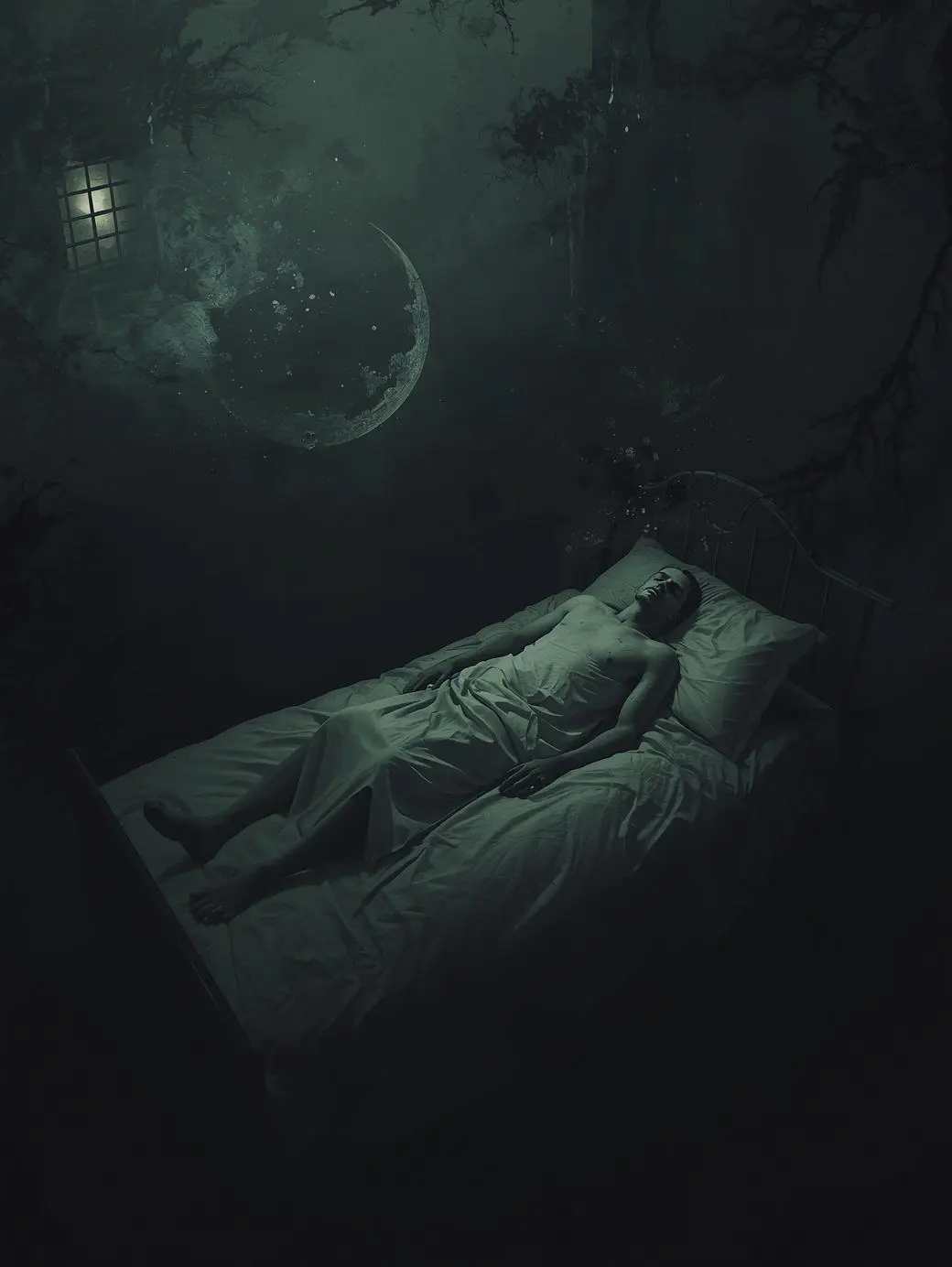
Sleep paralysis affects 8–50% of people globally — it is a documented physiological experience, not a supernatural emergency
Sleep paralysis affects between 8% and 50% of people globally at least once in their lifetime. Understanding the mechanism removes most of the terror from the experience.
| What Happens | Why It Explains the Experience |
|---|---|
| REM atonia persists into waking | The brain prevents body movement during REM sleep to stop you acting out dreams. When you wake during REM, this paralysis briefly continues — causing the sensation of being held down. |
| Hypnagogic hallucinations | The brain is still partially in dream mode. This explains the shadow figures, the sense of a presence, and auditory experiences — all of which vanish once you fully wake. |
| Chest pressure sensation | REM atonia affecting breathing muscles combined with heightened anxiety produces the “something sitting on my chest” sensation universally reported across all cultures. |
| It always ends on its own | Typically lasts seconds to a few minutes. It causes no physical harm and resolves completely every single time. |
Medical note: If episodes occur multiple times per week, consulting a doctor to assess for underlying sleep disorders — such as narcolepsy — is advisable alongside the Islamic spiritual response.
3. What Islamic Scholarship Says
“Whoever recites Ayatul Kursi before going to sleep, Allah will assign a protector who will keep Shaytan away from him all night long until he wakes up.”
— Prophet Muhammad ﷺ | Sahih Bukhari, 2311
View on Sunnah.com
Islamic scholars classify sleep paralysis within the ḥulm framework — shayanic disturbance exploiting the vulnerable moment between sleep and waking. Ibn Taymiyyah addressed this experience directly and was clear: it is not possession. Ibn al-Qayyim connected it to gaps in the spiritual protection routine.
- Classified as ḥulm — shayanic disturbance
- Shaytan exploits the sleep-wake boundary
- Missing bedtime adhkar is the primary spiritual cause
- Complete response in the Sunnah — no external help needed
- REM atonia persisting into waking state
- Hallucinations explain the “presence” sensation
- Sleeping on back significantly increases frequency
- Always resolves — causes no physical harm
Notably, the Sunnah recommendation to sleep on the right side — given 1,400 years ago — is now validated by sleep science as the position that reduces sleep paralysis. That is not a coincidence.
4. Why Sleep Paralysis Is Not Jinn Possession
This is the most important clarification. The fear of possession after sleep paralysis is one of the most common and most harmful overreactions in Muslim communities.
- Feeling held down does not mean jinn are touching you — REM atonia is a biological mechanism independent of jinn activity
- Seeing a shadow figure does not mean a jinn is present — Hypnagogic hallucinations occur during the sleep-wake transition and are experienced universally by people of all faiths
- Being unable to speak does not indicate spiritual attack — This is REM atonia timing — it always resolves within minutes
- Possession requires waking-state assessment — Persistent behavioural and physical symptoms verified by a qualified raaqi over time — not a temporary sleep experience
Sheikh Ibn Uthaymin (rahimahullah): “Muslims should not be hasty in concluding possession from experiences during sleep. The sleeping state is one in which Shaytan can disturb the believer. Possession is a separate matter that manifests in the waking state and requires proper investigation.”
5. What to Do DURING a Sleep Paralysis Episode
Critical Islamic guidance: If you cannot speak aloud, recite dhikr in your heart. Internal recitation is completely valid and effective according to Islamic scholarship. Shaytan cannot hear what is in your heart.
- Do not panic — this always ends
Panic intensifies the experience by increasing adrenaline and prolonging the paralysis. Remind yourself: this is temporary, it always resolves, you are safe.
- Recite ta’awwudh in your heart
“A’udhu billahi min al-shaytan al-rajeem” — internally, with full intention. Completely valid when spoken aloud is impossible.
- Recite Ayatul Kursi internally
Even just the opening — “Allahu la ilaha illa Huwal-Hayyul-Qayyum” — with full presence of heart.
- Try to move a single finger or toe
Small movements break REM atonia faster than attempting to move the whole body. This is consistent with both Islamic practice and sleep science advice.
6. The Sunnah Response After the Episode Ends
- Recite ta’awwudh three times aloud
“A’udhu billahi min al-shaytan al-rajeem” now that you can speak. (Sahih Muslim, 2261)
- Spit lightly to your left — three times
Dry blow to the left side, three times. (Sahih Muslim, 2262)
- Tell no one what happened
“Do not tell a bad dream to anyone.” (Sahih Muslim, 2261)
- Turn to your right side
Both the Sunnah recommendation and the medically validated position for reducing recurrence.
- Recite Ayatul Kursi and Three Quls
In full, with full presence. Blow on hands and wipe over body after each Qul. (Sahih Bukhari 2311, Abu Dawud 5055)
7. Prevention — The Combined Islamic and Sleep Hygiene Protocol
- Every night: Ayatul Kursi + last two ayahs Al-Baqarah + Three Quls × 3
- Sleep on your right side — Sunnah and medically validated against sleep paralysis
- Sleep in wudu every night
- Maintain a consistent sleep schedule — irregular timing is the primary medical risk factor
- Recite or play Surah Al-Baqarah at home regularly
- Maintain all five daily prayers — the foundation of every spiritual protection
- No screens or disturbing content in the hour before sleep
- Daily sincere tawbah — a clean conscience dramatically improves sleep quality
8. Frequently Asked Questions
Scholars classify it within the ḥulm framework — shayanic disturbance during the sleep-wake transition, not jinn physically present in the room. It also has a clear medical explanation: REM atonia. Addressing both the spiritual cause (restoring bedtime adhkar) and the physical cause (sleep position, regular schedule) gives the most effective and lasting results.
No. Ibn Taymiyyah, Sheikh Ibn Baz, and Sheikh Ibn Uthaymin all addressed this directly — sleep experiences do not constitute possession. Possession requires persistent waking-state symptoms assessed by a qualified raaqi. Concluding possession from sleep paralysis typically increases waswaas without addressing the real causes.
If you cannot speak, recite “A’udhu billahi min al-shaytan al-rajeem” and Ayatul Kursi in your heart — internal dhikr is fully valid. Once you can speak, complete the full Sunnah response: ta’awwudh three times aloud, spit lightly left three times, then Ayatul Kursi and Three Quls in full.
Yes — according to the authenticated hadith in Sahih Bukhari 2311, consistent recitation of Ayatul Kursi before sleep brings Allah’s protection through the night. Many Muslims report that consistently restoring this practice — combined with sleeping on the right side — significantly reduces or completely stops sleep paralysis episodes.
No — experiencing sleep paralysis is not haram. It is a physiological experience that spiritual gaps and poor sleep habits can make more frequent. What matters is the response: applying the Sunnah protocol, restoring your spiritual shield, and not drawing incorrect conclusions about possession or spiritual attack.
🔮 Had a confusing dream about jinn or sleep paralysis? Get a free personalised Islamic interpretation at TheDreamExplainer.com — describe what you saw and receive a grounded, scholar-based explanation tailored to your dream.
Sleep Paralysis Is Understood — and Answered — in Islam
It is not possession. It is not a curse. It is a shayanic disturbance meeting a biological phenomenon — and Islam addresses both.
Restore your adhkar. Sleep on your right side. Recite Ayatul Kursi every single night without exception. The protection given in the Sunnah is complete — because it is.
“And seek help through patience and prayer. Indeed, Allah is with the patient.” —
Quran, 2:153
Sahih Muslim (2261, 2262) · Sahih Bukhari (2311) · Abu Dawud (5055) · Ibn Taymiyyah — Majmu’ al-Fatawa · Ibn al-Qayyim — Zad al-Ma’ad · Sheikh Ibn Baz — Compiled Fatawa · Sheikh Ibn Uthaymin — Compiled Fatawa · Sleep paralysis medical data — Journal of Sleep Research (Sharpless & Barber, 2011) · IslamQA.info
Every Sleep Science Dream Scenario Interpreted
⚠ Warning
⚠ Warning
⚠ Warning
◆ Contextual
⚠ Warning
What Three Classical Scholars Say About Sleep Science Dreams
Critical Mistakes When Interpreting Sleep Science Dreams
- ✗Concluding you are possessed because of sleep paralysisSleep paralysis is one of the most common sleep disorders, affecting up to 40% of people at least once. It is not evidence of jinn possession. Scholars require multiple waking-life symptoms beyond sleep paralysis for any discussion of affliction.
- ✗Seeking ruqyah as the first and only responseWhile ruqyah is a legitimate Islamic practice, it is not the first-line response to sleep paralysis. The authenticated Sunnah prescriptions — Ayat al-Kursi, the three Quls, Surah Al-Mulk before sleep — should be consistently applied first.
- ✗Ignoring lifestyle and sleep hygiene factorsSleep deprivation, irregular sleep schedules, sleeping on your back, and high stress significantly increase sleep paralysis frequency. Addressing these practical factors is part of the Islamic principle of taking means (asbab) alongside du’ā.
- ✗Treating voices or visions during paralysis as divine messagesNothing perceived during a sleep paralysis episode carries spiritual authority. Scholars are clear: this is a liminal state where Shaytan operates — not a channel for divine communication.
- ✗Sleeping without any pre-sleep adhkarThe single most impactful prevention — both spiritually and, according to studies on relaxation and sleep quality, physically — is a consistent pre-sleep routine including Ayat al-Kursi and the three Quls. This is the prophetic prescription and it works.
🌙 Track Your Sleep Paralysis Patterns
Recording when episodes happen, your pre-sleep routine, and sleep duration reveals patterns that help you prevent recurrence — spiritually and practically.
📚 Related Islamic Dream Guides
📚 Authoritative Islamic Sources Referenced
- Ibn Sirin, Muhammad. Tafsir al-Ahlam al-Kabir. Beirut: Dar al-Kutub al-Ilmiyyah.
- Al-Nabulsi, Abd al-Ghani. Ta’tir al-Anam fi Tafsir al-Ahlam. Cairo: Dar al-Hadith.
- Al-Bukhari, Muhammad. Sahih al-Bukhari, Kitab al-Ta’bir. View Hadith 6985 on Sunnah.com ↗
- Muslim ibn al-Hajjaj. Sahih Muslim, Kitab al-Ru’yā. View Hadith 5901 on Sunnah.com ↗
- Ibn Qutaybah, Abd Allah. Ta’bir al-Ru’yā. Beirut: Dar al-Kutub al-‘Ilmiyyah.
- Al-Qurtubi, Muhammad. Al-Tadhkirah fi Ahwal al-Mawta.
- Qur’an — multiple Surahs referenced in article. Read on Quran.com ↗